
Pantry Organization for Everyday Food Storage
Arrange dry-food shelves by use, keep original storage information, and rotate supplies without buying a matching set of containers.
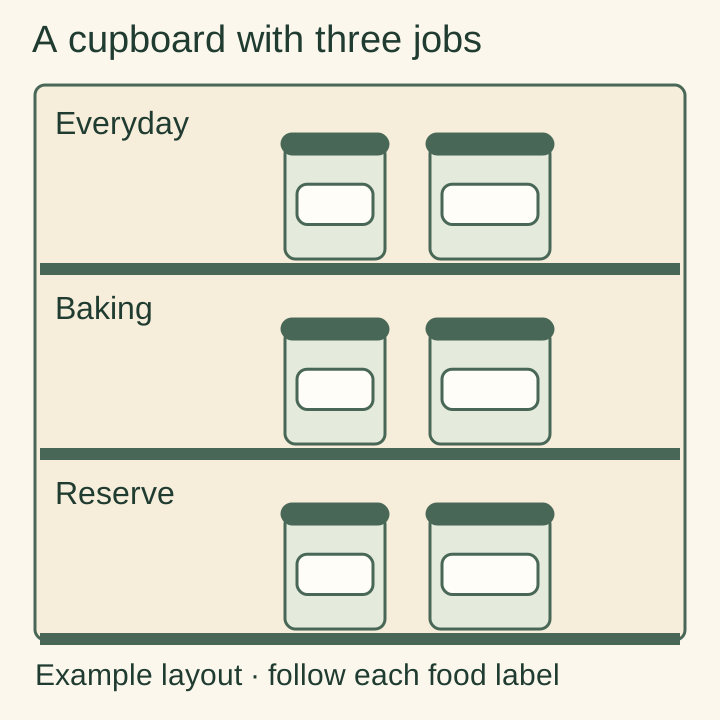
Organize a pantry by putting food you use together in visible groups, keeping opened supplies in front of reserves, and retaining the package instructions when you change containers. A pantry can be a room, a cupboard or one shelf. Its size changes the layout; it does not change which foods need refrigeration.
A forgotten open bag and a second unopened bag create the same problem in a large pantry as in a small cabinet: you buy food you already have while losing track of the first supply. Start with what is on the shelf. A matching container set is optional. This guide covers household dry-food organization; the food-storage hub explains the separate pantry, refrigerator and freezer decisions.
Sort the food before choosing the containers
Takeaway: Make storage instructions the first sorting rule, then group the shelf-stable foods around the way you cook.
Read the package directions, including any instruction that changes after opening. FDA cautions that foods needing refrigeration are not limited to obvious perishables. Keep household cleaners and other chemicals away from food. A neat basket cannot turn an unsuitable storage location into a suitable one.
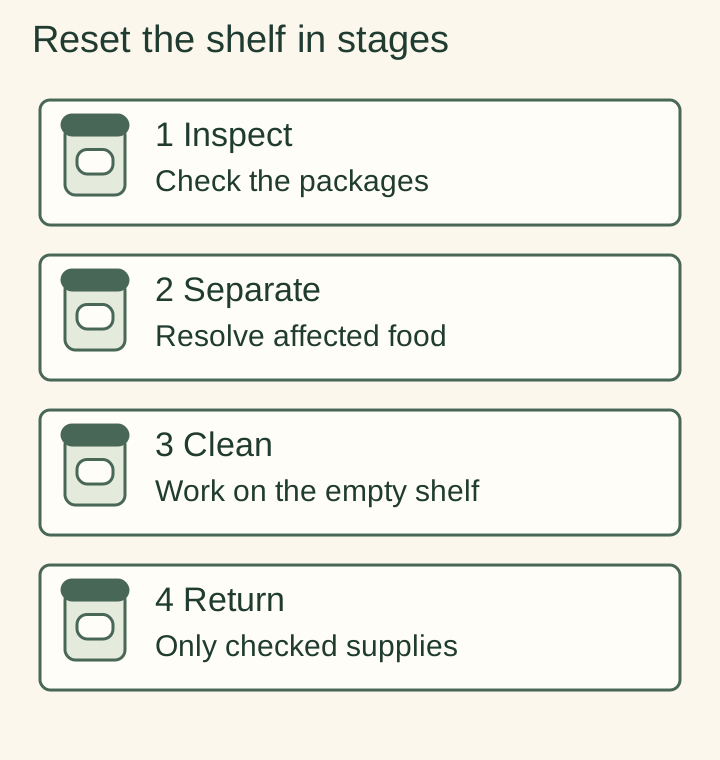
Empty one manageable section at a time and make an inventory before moving to the next. Set aside items whose storage history or damaged packaging needs checking. Do not use appearance or smell alone to decide that questionable food is safe; FDA distinguishes harmful contamination from visible spoilage.
For the foods that belong on a dry-food shelf, these are useful starting groups:
Scroll horizontally to see all columns.
| Group | What belongs together | Arrangement to try |
|---|---|---|
| Everyday cooking | Ingredients you reach for during ordinary meals | Put the opened supply where you can read its label |
| Baking | Flour, sugar and other shelf-stable baking ingredients | Keep each ingredient identifiable; a shared tray can hold the original bags |
| Breakfast and snacks | Foods the household chooses regularly | Give each product an obvious return place |
| Reserve stock | Unopened replacements for an existing supply | Keep them behind or separately from the active package |
| Check before using | An item needing a label, recall or storage-history check | Keep it out of the ready-to-use group until resolved |
These are working groups, not food-safety categories. The same ingredient can sit with breakfast in one household and baking in another. If your quinoa is usually a dinner ingredient, place it with the ingredients for those meals. A tahini label may give product-specific storage directions; a convenient cooking group does not override them.
Use the depth of the cupboard without hiding the stock
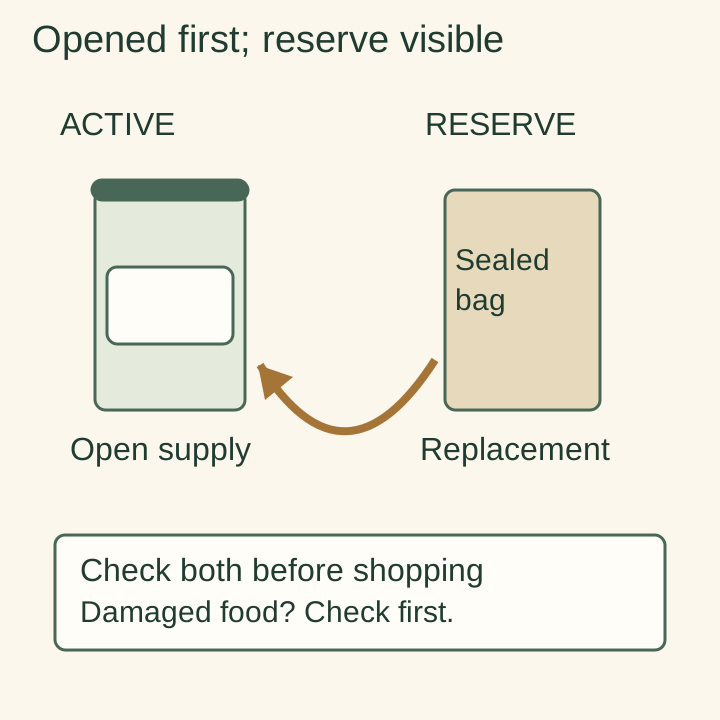
Takeaway: Keep the active supply visible and make the reserve location easy to check before shopping.
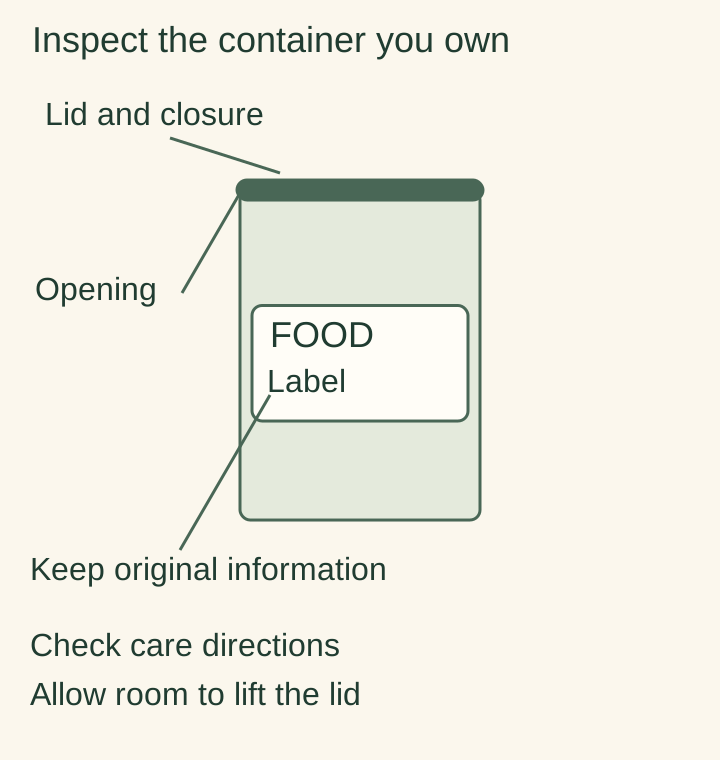
A walk-in pantry permits several shelves of categories. A kitchen cupboard may need two or three small groups on the same shelf. Neither requires new shelving. Measure the usable opening, shelf depth and clearance before choosing a basket or container; include the space needed to lift a lid or remove the item.
If your kitchen has no dedicated pantry, use the small-kitchen pantry storage guide to compare cupboards, door backs, counter corners and carts before choosing a location.
Try the arrangement with the packages you already own. Can you retrieve one item without unloading its neighbours? Can the shortest regular user see the active supplies? Does a door hinge obstruct the box you plan to use? Those are more useful buying questions than whether every vessel has the same shape.
Give reserves a named place. An unopened replacement behind the current bag works when both remain visible. If deep shelves hide it, put reserves in a separate labelled group and note the quantity in your stock list. The goal is to know what is there, not to squeeze in another purchase.
Food-specific needs still matter. Our coffee-bean storage guide deals with the light and air questions for coffee. The granola guide and cookie guide address their own texture and storage situations. Do not apply one food’s instructions to every dry-looking ingredient.
Choose a container for the job, not the shelf photograph
Takeaway: Check intended food use, closure, access and cleaning instructions before you decant anything.
You can organize a cupboard while leaving every item in its original packaging. A tray around several bags may be enough. Decant only where another container solves a problem you actually have, such as an awkward opening or a package that is difficult to return to the shelf.
Scroll horizontally to see all columns.
| Check | What to inspect | Reason to keep the original package instead |
|---|---|---|
| Intended use | Manufacturer’s food-use and care instructions | You cannot establish that the vessel is intended for the food or use |
| Closure | Lid fit, threads, clips or gasket condition | The closure is damaged or difficult for the user to close fully |
| Visibility | Can you identify the contents and remaining quantity? | A clear vessel would conflict with that food’s light-storage instructions |
| Size | Shelf clearance, opening width and the amount you actually buy | The container requires splitting one purchase across unlabelled vessels |
| Cleaning | Access to corners and any removable lid parts | You cannot follow the care instructions or dry it properly before refilling |
| Information | A place for the original label or a legible copy | Ingredients, allergens, lot information or storage directions would be lost |
Transparency is a convenience, not a universal requirement. An opaque container with a clear label may work better for a particular food. Nor does a material name alone tell you whether a specific lid closes well or whether the entire container can go in a dishwasher. Check the actual product’s directions; this guide does not certify glass, plastic or metal as a category.
The distinction in our airtight versus vacuum-sealed guide is relevant when comparing closure methods. Here, neither label earns a longer storage allowance. Use food-specific instructions rather than inventing a new shelf life after repacking.
Keep an opened date and a stock count that you will use
Takeaway: Separate your household tracking dates from the manufacturer’s information and check the list before buying replacements.
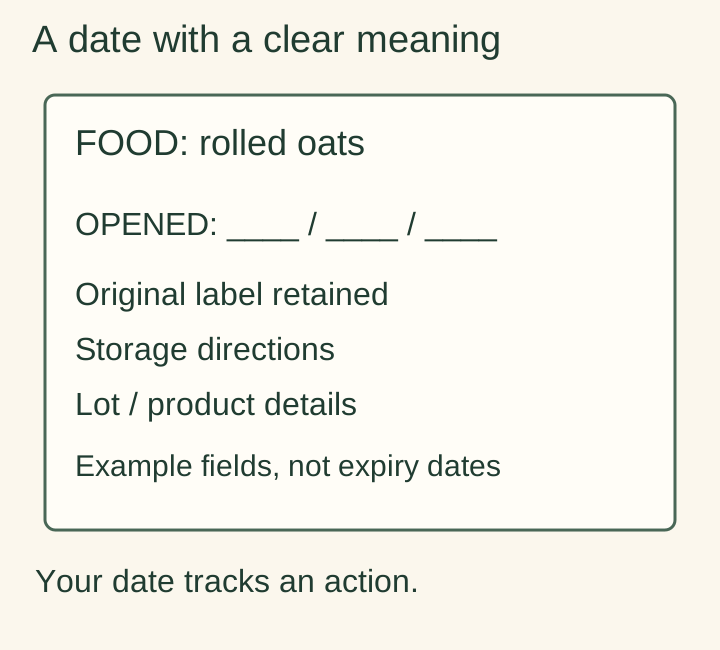
A useful home label has the food name, the date you opened or transferred it, and a way to find the original package details. Write “opened” or “transferred” beside your date. Do not make that handwritten date look like a manufacturer-issued use-by date.
Keep different purchases distinguishable rather than repeatedly topping up an unidentified mixture. This makes it easier to connect a food to its original label. The stock sheet can be paper inside the cupboard door or a note on your phone; a complicated app is unnecessary if a short list stays current.
Scroll horizontally to see all columns.
| Food | Active supply | Reserve | Next action |
|---|---|---|---|
| Example: rolled oats | Open bag; opened date recorded | One unopened bag | Use the active bag before opening the reserve |
| Example: canned beans | Two intact cans | None in another cupboard | Check meal plans before buying more |
| Example: baking ingredient | Package needs checking | Unknown | Read the label and count before shopping |
The rows are examples, not suggested stocking quantities. University of Minnesota Extension recommends using older supplies before newer ones and opened packages before unopened ones. Rotation works only after you check that the food is still appropriate to use.
For keeping-time guidance, use FoodKeeper and the package instructions for the actual food and its opened or unopened state. FoodSafety.gov describes FoodKeeper as a tool for freshness and quality. We have not verified individual dry-food storage periods for this article and do not provide a universal number of months.
A pantry list also helps reveal food that belongs elsewhere. Follow the separate guidance for bread storage or freezing portions of soup when those foods enter your household; they do not become dry pantry stock because a shelf has room.
Treat moisture and insects as problems to investigate
Takeaway: Find the affected food or source of dampness before putting supplies back into a cleaner-looking arrangement.
If a shelf or package is damp, identify what happened before restocking it. Do not simply move wet food into a new container and assume the issue is solved. For damaged cans, FDA advises rejecting swollen, leaking, punctured, heavily rusted or severely dented containers.
For suspected pantry insects, University of Minnesota Extension advises checking susceptible foods, including pet food and bird seed. Infestation can occur in unopened packages as well as open ones. Discard infested food, vacuum shelf cracks and corners, and empty the vacuum afterward. Keep uninfested supplies in tightly closed glass, metal or heavy-plastic containers. The Extension guidance does not recommend insecticide sprays in stored-food cupboards.
A recurring sighting deserves another inspection rather than another scented sachet. If you cannot connect the insect to stored food, identification matters: not every insect found in a kitchen is a pantry pest. The Extension identification guide includes descriptions and photographs.
Frequently asked questions
How do I organize a shared pantry without moving everybody’s food?
A reader describing a shared kitchen raises both access and ownership concerns. Agree on shared supplies and personal areas before redistributing them. Try a small shared zone first, and ask the people using it where they can comfortably reach. These are household arrangements, not reasons to discard or decant someone else’s purchases without agreement.
Can dishes and food share the same cupboard?
A small-kitchen organization question describes exactly that layout. As an organizing choice, give dishes and food distinct places so removing a bowl does not require moving loose bags. This article does not certify a particular cupboard’s hygiene or load capacity. Keep the food’s own storage needs in view; a combined cupboard need not become an excuse to relocate cleaners beside it.
Do bay leaves stop pantry bugs?
The question appears in a published discussion of bay leaves in pantry canisters. University of Minnesota Extension says there is no evidence that bay leaves or spearmint gum prevent or remove pantry pests. Do not substitute either for inspecting food and addressing an infestation. The discussion supplies the question; Extension supplies the answer.
What does the printed code on a can mean?
The archived USDA Shelf-Stable Food Safety fact sheet distinguishes packing codes from consumer-facing dates. A letters-and-numbers code helps identify a production lot; do not translate it into a use-by date by guessing. Ask the manufacturer about a code you cannot interpret. Retaining it also keeps the product identifiable if you need to ask a question about that can.
Must I discard a can with any rust on it?
The same USDA fact sheet distinguishes removable surface rust from heavy rust. It advises discarding heavily rusted cans and not eating the contents if rust is present inside when opened. This is a package-condition question, not an invitation to hide damage with a new label. If you cannot tell the extent of corrosion, seek product-specific guidance rather than treating the shelf as a place to keep an unresolved suspect can.
Does a hissing can always mean the food is unsafe?
USDA’s archived fact sheet explains that pressure changes can cause a normal hiss when a vacuum-packed can opens. A loud hiss or forcefully spurting contents can indicate unsafe food; it says not to taste or use that food. A noise alone is not a home safety test. Do not taste questionable contents to settle the uncertainty.
Method and scope
Takeaway: This is a household organizing guide with named safety sources, not a container test or a new storage-time chart.
Read-n-Eat’s editorial team prepared this article with source review on October 7, 2026. The shelf layouts, labels and stock sheet are household planning examples. FDA and University of Minnesota Extension supply the safety and pest guidance; FoodKeeper is the route for food-specific storage information. The USDA document linked below is a historical original, used for its explicit canned-food questions rather than current legal requirements or storage-time claims.
The three linked reader discussions establish the questions people ask; their replies are not safety authorities. The remaining three questions are headings in the USDA fact sheet itself. For a larger kitchen-storage decision, return to the food-storage overview. Cabinet construction, shelf installation, product rankings and building repairs are outside this guide.
Explore more in Food Storage & Freezer Guides.
Official guidance and sources
Sources last checked October 7, 2026.
- Are You Storing Food Safely? , FDA (accessed October 7, 2026)
- Pantry pests — insects found in stored food , University of Minnesota Extension (accessed October 7, 2026)
- FoodKeeper App , FoodSafety.gov (accessed October 7, 2026)
- Shelf-Stable Food Safety — archived USDA fact sheet , USDA FSIS, archived by the U.S. Government Publishing Office (accessed October 7, 2026) Historical original used for named canned-food questions; not a current storage-time table.