
Freezer Burn Prevention: Ice Sublimation, Headspace Pockets & Vapor-Barrier Wrapping
Explore freezer burn prevention: ice sublimation, excess air pockets, moisture-resistant wrapping, and headspace for fruit packs.
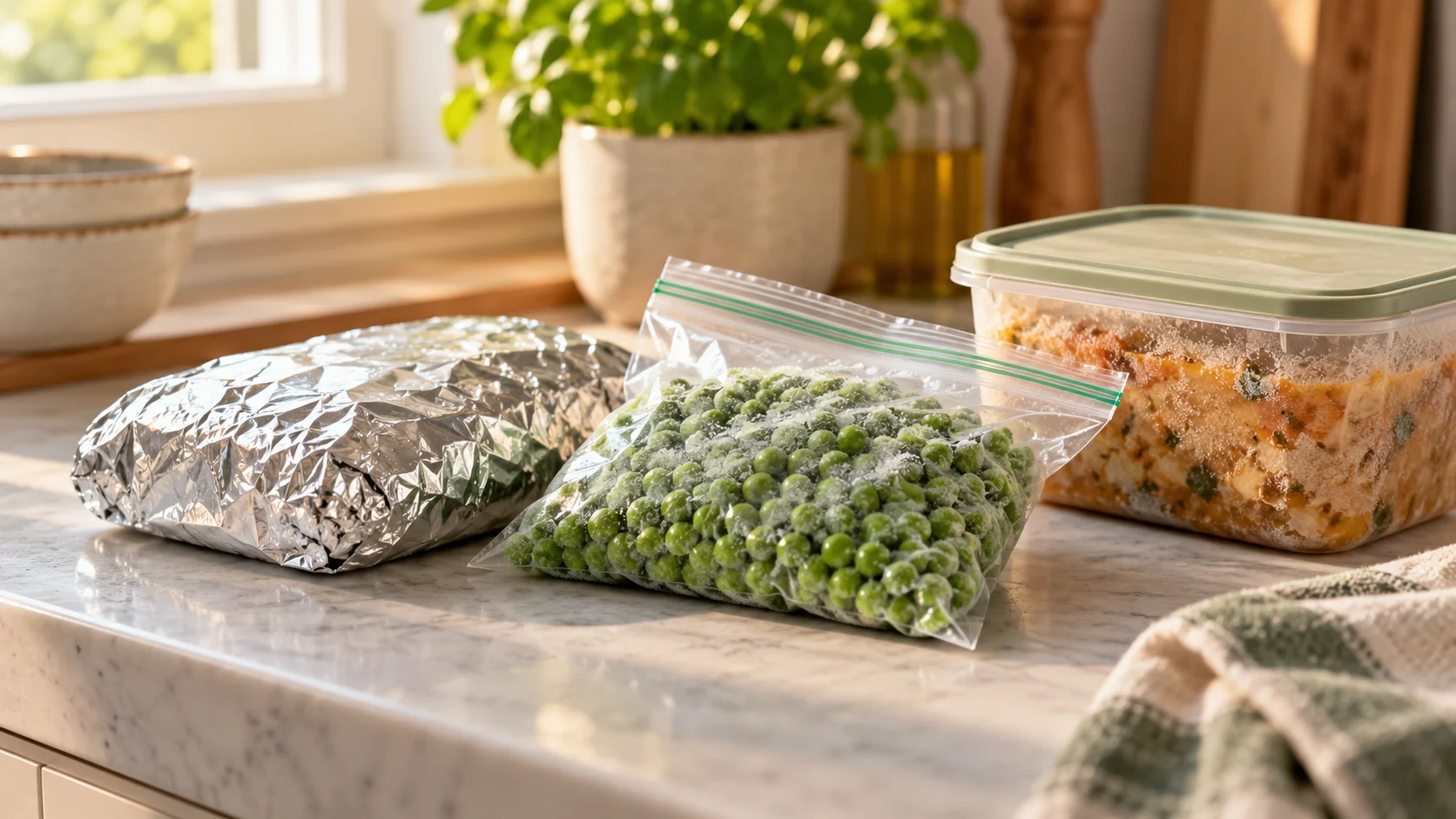
Sublimation removes moisture from frozen food as ice changes directly into vapor without becoming liquid. For freezer burn prevention, wrap and seal tightly, avoid excess headspace air, and use materials with a low water vapor transmission rate.
Start with the food you want to pack. Use the sections below to choose wrapping, check headspace, and decide what to do with an already-damaged package. For the broader kitchen guide, visit food storage.
How ice sublimation dries frozen food
Surface ice sublimates when its vapor pressure exceeds the vapor pressure of water in the air. In typical resealable multi-serving packages of individually quick frozen foods, loose wrapping exposes food to excess headspace air and promotes sublimation during extended frozen storage.
In these loosely packed foods, sublimated water can condense on the cold inner surface of the package.
Freezer burn can appear as grayish-brown leathery spots. Meat browning can have causes other than freezer burn, including lack of oxygen or long storage.
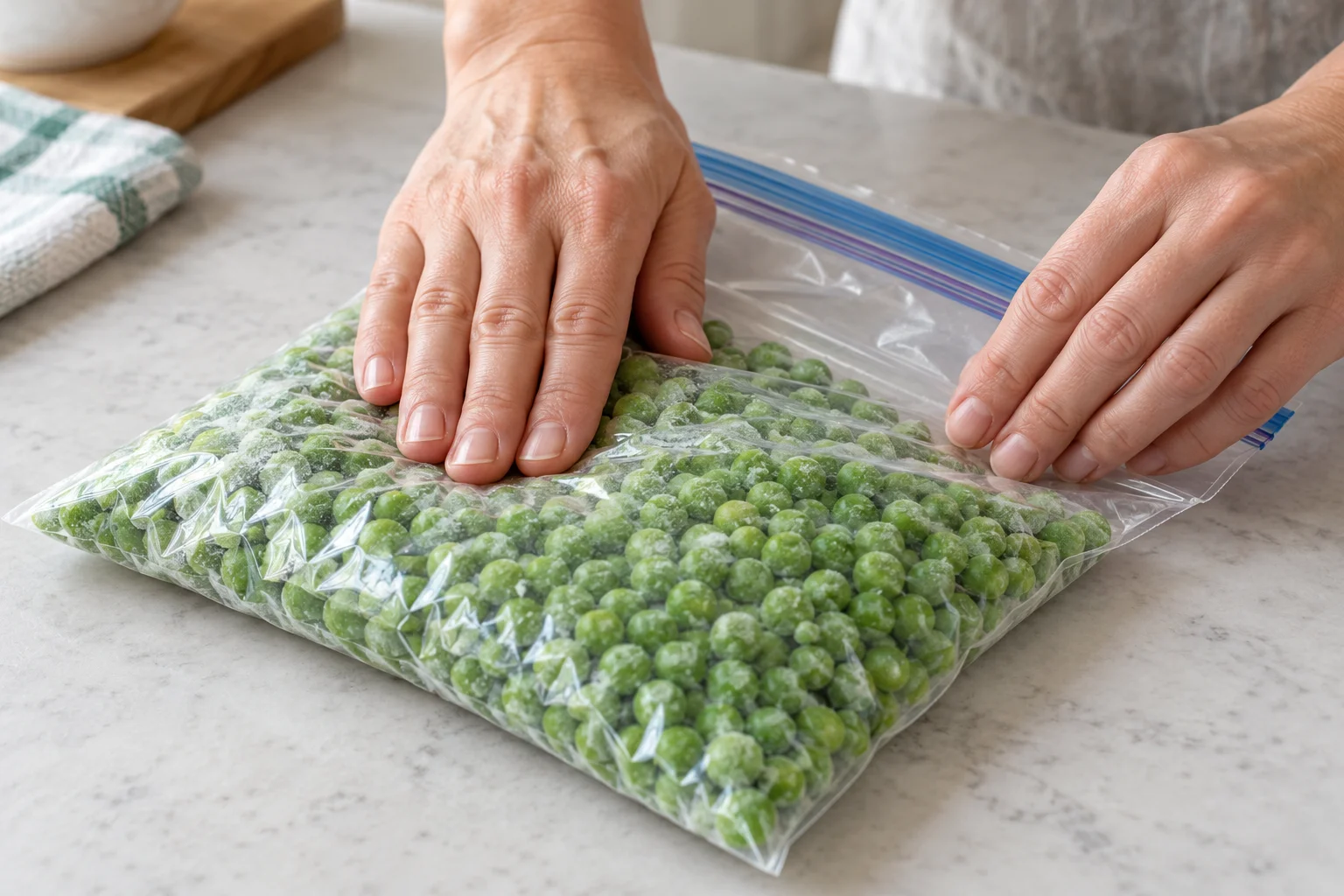
Press air out of freezer bags
Freezer bags and moisture-vapor resistant wraps work well for irregularly shaped foods. Press as much air as possible out of freezer bags before closing.
Squeezing a bag around its contents without crushing them removes air. Pack food in meal-size quantities.
When repackaging meat, remove as many bones as possible — they take up freezer space and add air spaces where oxidation can occur.
Leave expansion headspace where the food needs it
High-moisture frozen foods need headspace. Liquid expands when frozen, causing syrup to overflow. Required headspace varies with pack type and container size.
Choose the instruction for your particular pack:
- Fruit in juice, sugar, syrup, or water, and crushed or pureed fruit should have ½-inch headspace in wide-top pint containers.
- Fruit in juice, sugar, syrup, or water, and crushed or pureed fruit should have 1-inch headspace in wide-top quart containers.
- Loosely packed vegetables do not need extra headspace because space exists between pieces.
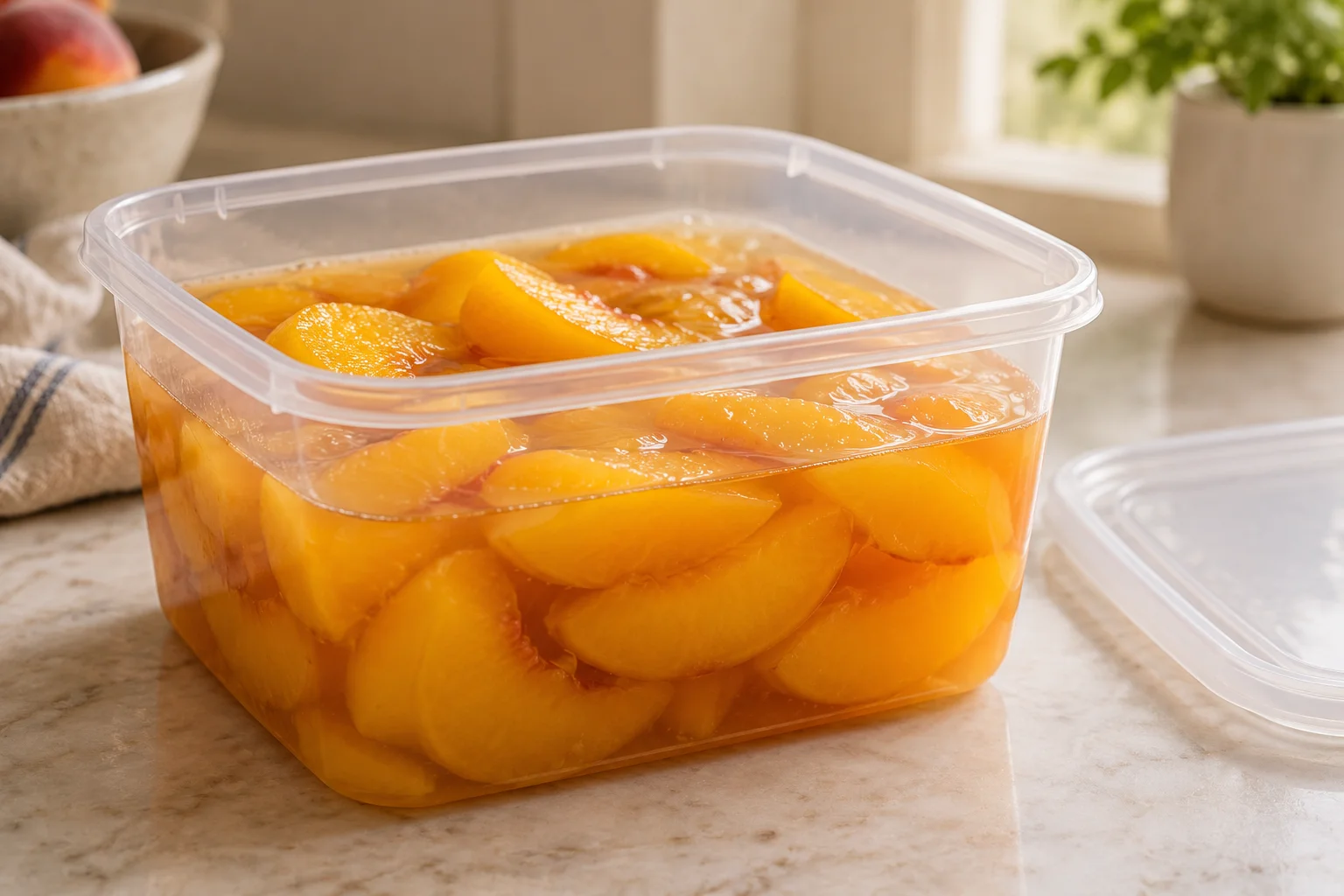
For rigid freezer containers, use a tight lid and keep moisture and food off the sealing edge.
Choose a moisture-vapor barrier and seal the wrap
Freezer packaging should resist moisture vapor. Freezer packaging should be durable and leakproof. Freezer packaging should resist becoming brittle and cracking at low temperatures.
For meat in porous supermarket wrapping, overwrap the store plastic with aluminum foil, freezer paper, or freezer-weight plastic wrap or bags for long-term freezing. Seal the outer packaging well to keep air out and moisture in.
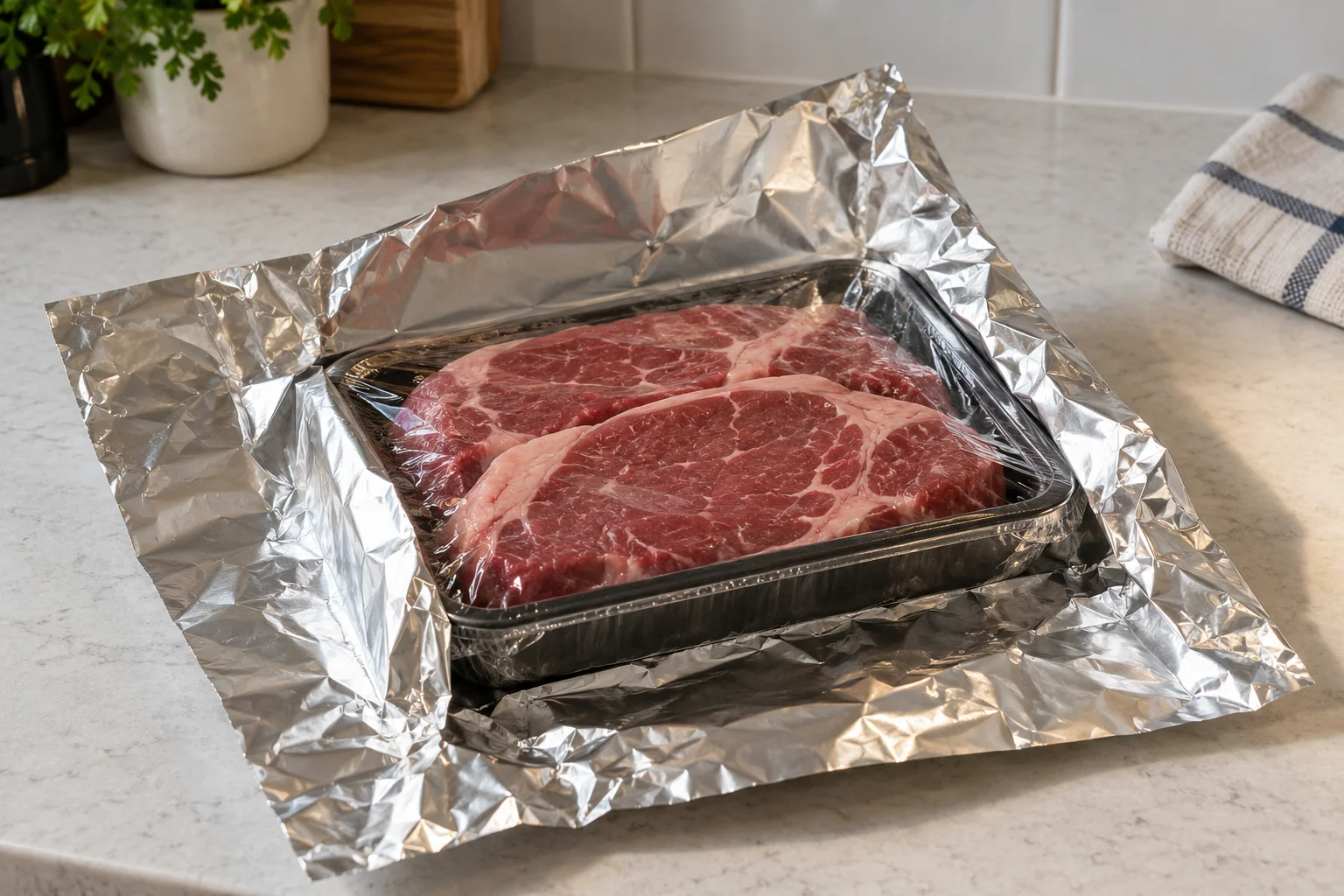
For meat, poultry, or seafood, a recommended wrapping sequence is freezer paper or plastic wrap, then foil, then a freezer bag.
For a different container at home: Cover the top of ice cream with freezer paper or plastic wrap before replacing its lid.
Check temperature and the freezing routine
Use a free-standing freezer at 0 °F or below for long-term frozen storage. Use an appliance thermometer to check freezer temperature. Lower storage temperature slows the sublimation rate.
Cool food rapidly in the refrigerator or an ice bath before freezer packaging. Cold foods are less likely to trap steam in packaging.
Freeze food as soon as it is packed and sealed. Leave a little space between packages so air can circulate freely; when the food is frozen, store the packages close together.
Common freezer burn questions
Is freezer-burned food safe to eat?
Freezer burn itself does not make food unsafe; it dries spots on the food. Freezing does not sterilize food.
Cut freezer-burned portions away either before or after cooking the food. Heavily freezer-burned food may need discarding for quality reasons.
Does vacuum sealing help?
For meat, home vacuum packaging can reduce freezer burn. Unopened vacuum packages can be frozen as they are.
For products such as bread, vacuum headspace reduction can harm the texture.
What if the package tears in the freezer?
Overwrap or rewrap a package that tears or opens while food remains in the freezer.
Return to the food storage guide to plan the rest of your kitchen storage.
Explore more in Food Storage & Freezer Guides.
Official guidance and sources
Sources last checked October 29, 2026.
- Schmidt and Lee — How Does the Freezer Burn Our Food?
- USDA FSIS — Freezing and Food Safety
- NCHFP — Containers for Freezing
- Iowa State Extension — Freezer Burn and Food Safety
- NCHFP — Packaging and Labeling Foods
- Illinois Extension — Freezer Storage
- Penn State Extension — Why Allow Headspace when Canning and Freezing Food?
- Texas A&M AgriLife Extension — What is freezer burn?
- NCHFP — Freezing Pointers
- Utah State University Extension — Food Preservation: Freezing Basics
- IFT — Frozen Food Packaging Heats Up