
No Pantry? Storage Ideas
Use cupboards, door backs and carts in a small kitchen while keeping room to cook.
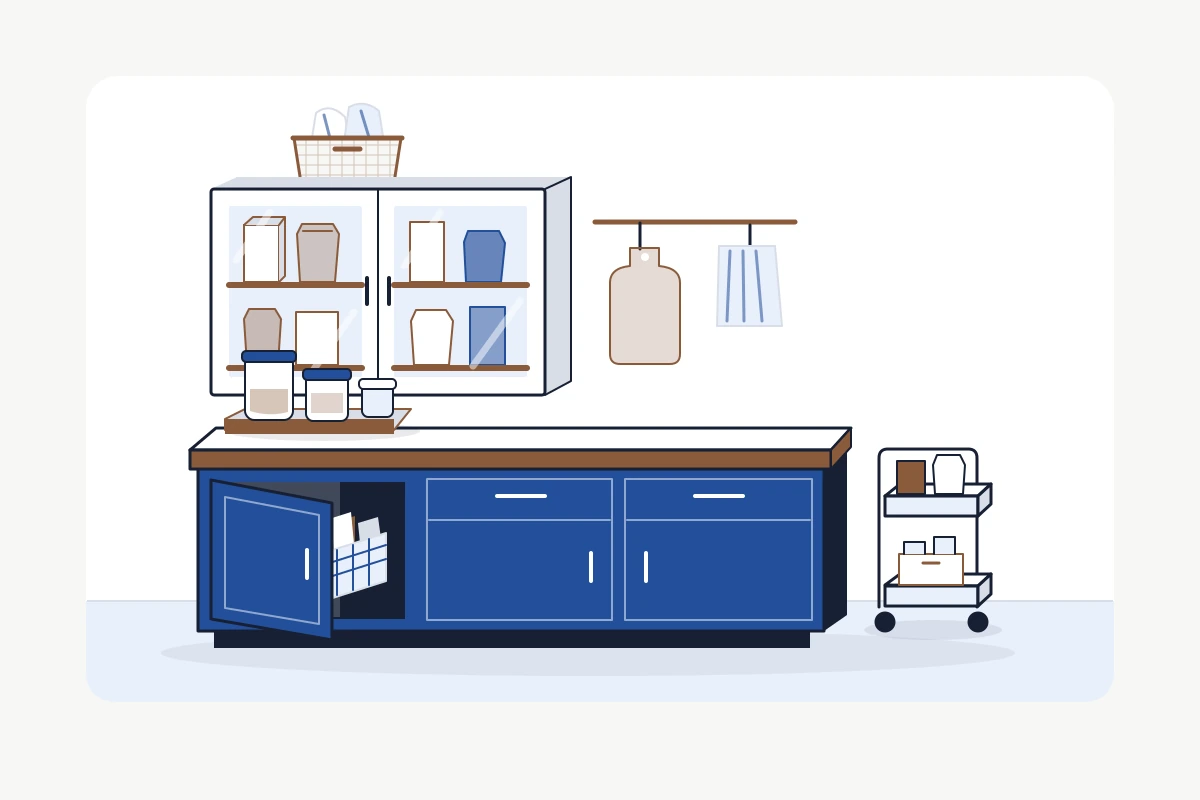
A storage organizer that blocks a cupboard door wastes space in a small kitchen. To store pantry items without a pantry, start with an existing cupboard or drawer, then add only storage that fits the food’s instructions and your kitchen’s working space.
You can make a pantry out of several small storage locations rather than a separate room or tall cabinet. Give everyday shelf-stable food an accessible home first; use a door-back organizer, counter tray or parked cart only where it leaves doors, appliances and walkways usable. This guide helps you choose those locations and check racks and bins before buying. It does not recommend brands, set shelf capacities or replace instructions for individual foods. Once you have a location, the pantry-organization guide covers grouping supplies, labels and stock rotation.
| Input or item | Typical value or source | Why it matters |
|---|---|---|
| Food storage needs | Original package instructions | Determines whether the food belongs outside the refrigerator |
| Usable opening | Your cupboard or drawer measurement | Handles and hinges can reduce the opening |
| Depth and height | Your shelf and largest regular package | The package needs to fit and come out again |
| Opening space | Lid, drawer and door movement | A closed organizer may fit while an open one does not |
| Door-back clearance | Door, basket and facing shelf | The loaded door must close as intended |
| Load and installation | Exact product’s manufacturer instructions | A material or photograph does not establish capacity |
| Cart parking space | Your kitchen with appliances open | Storage needs a home between uses |
Find usable space before buying storage
Start by moving kitchen items that do not need a prime cupboard, rather than fitting food into every spare gap. Try relocating a seldom-used serving bowl or seasonal baking tool to another suitable cupboard. The space it frees may be more useful for groceries than a new rack in the walkway.
For each candidate food location, check the label requirements and what happens nearby during cooking. FDA advises following food storage directions and keeping non-perishable food away from household chemicals. We recommend leaving a cupboard used for cleaners out of your food-storage plan.
Check food-specific quality needs too. The National Coffee Association advises keeping coffee away from heat and strong sunlight. A sunny counter beside the coffee maker may be convenient but unsuitable for the beans; the coffee-storage guide explains that choice. A spot suitable for coffee does not establish the requirements for everything else.
Draw a rough kitchen outline and mark candidate spaces. Cross out locations that interfere with cooking, cannot be reached comfortably, or conflict with the food’s directions. The food-storage overview helps distinguish pantry choices from refrigerator and freezer tasks.
Takeaway: Free a suitable existing storage space before adding furniture to a crowded kitchen.
Match the storage type to the space you have
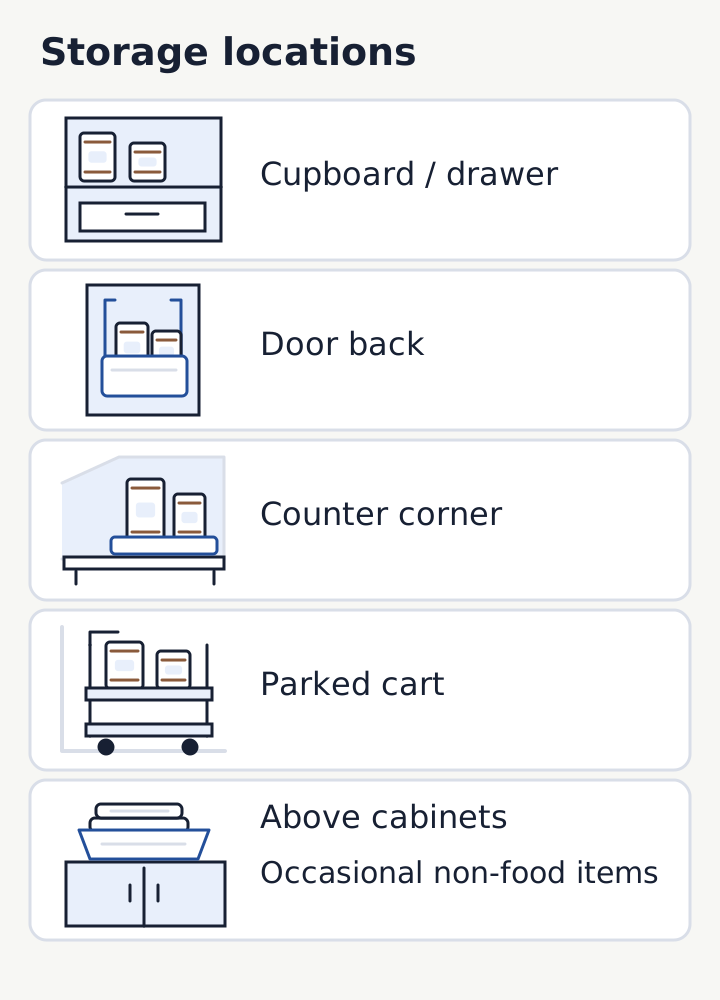
Choose an organizer by the space it occupies during use. A drawer needs room to extend, a door basket needs closing clearance, and a cart needs a parking place. The following are options to try, not a ranking or a claim that every kitchen can accommodate them.
| Storage form | Where to try it | Check before using it |
|---|---|---|
| Existing cupboard or drawer | A space freed by moving less-used kitchenware | Package visibility, retrieval and the existing shelf’s instructions |
| Door-back organizer | A compatible cupboard door with unused clearance | Loaded basket depth, hinges, closure and approved mounting method |
| Counter tray | A corner that leaves preparation space available | Food instructions, nearby heat or splashes, and the actual space the tray takes |
| Narrow cart | A usable floor recess or adjacent dining area | Full footprint, handles, appliance doors and a place to park it |
| Above-cabinet storage | A suitable, accessible surface for occasional kitchenware | Our suggestion is lightweight non-food items, after checking the surface and safe retrieval |
| Existing adjacent-room cupboard | A suitable cupboard close enough to use routinely | Food conditions, separation from chemicals and a clear inventory location |
Above-cabinet space can help indirectly: move suitable occasional kitchenware there and leave reachable cupboards for food. Do not treat a high ledge as the automatic destination for heavy jars or groceries you need every day. If safe retrieval or the surface’s suitability is uncertain, skip that location.
A counter tray is a boundary, not a new storage environment. Keep the food covered as appropriate and follow its instructions. Read the separate guides for homemade granola and soft versus crisp cookies before putting both into a single open display.
Takeaway: Select the location and test its movement space before selecting the organizer.
Measure the space you use, not just the space you see
Measure the narrowest usable opening, the interior depth and the available height. Then check the extra room needed to remove a package or open its container. We suggest using the largest package you regularly buy as a trial object, with a paper footprint for any proposed organizer.
For a kitchen storage rack for small spaces, record:
- The full outside footprint, including feet, handles or wheels.
- The usable shelf dimensions, rather than only the unit’s overall dimensions.
- The access space needed to reach the back and lift out your usual packages.
- Manufacturer load limits and the conditions attached to them, including any separate shelf and whole-unit limits.
- Installation or anchoring instructions for the particular product and location.
There is no capacity figure that applies to all metal racks, plastic organizers or wooden shelves. Use the exact manufacturer’s documentation. CPSC advises following manufacturers’ instructions when securing furniture and addressing top-heavy furniture; a weight limit alone does not answer whether a unit needs fixing in place.
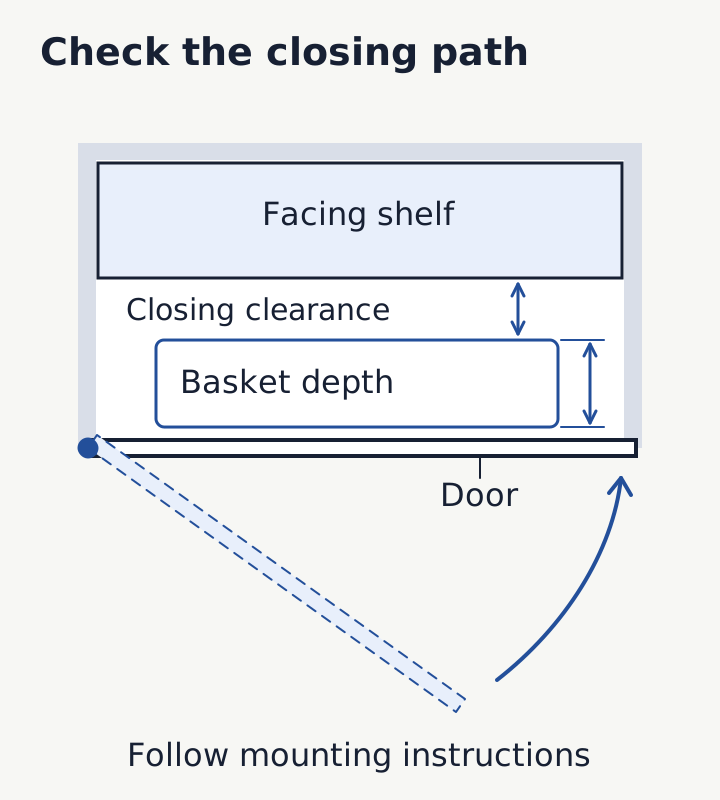
On a door back, check the gap between the closed door and the shelf or contents facing it. Also check whether the proposed bracket interferes with the door edge or hinge. Follow the organizer’s installation directions; do not force the door shut around a basket that protrudes too far.
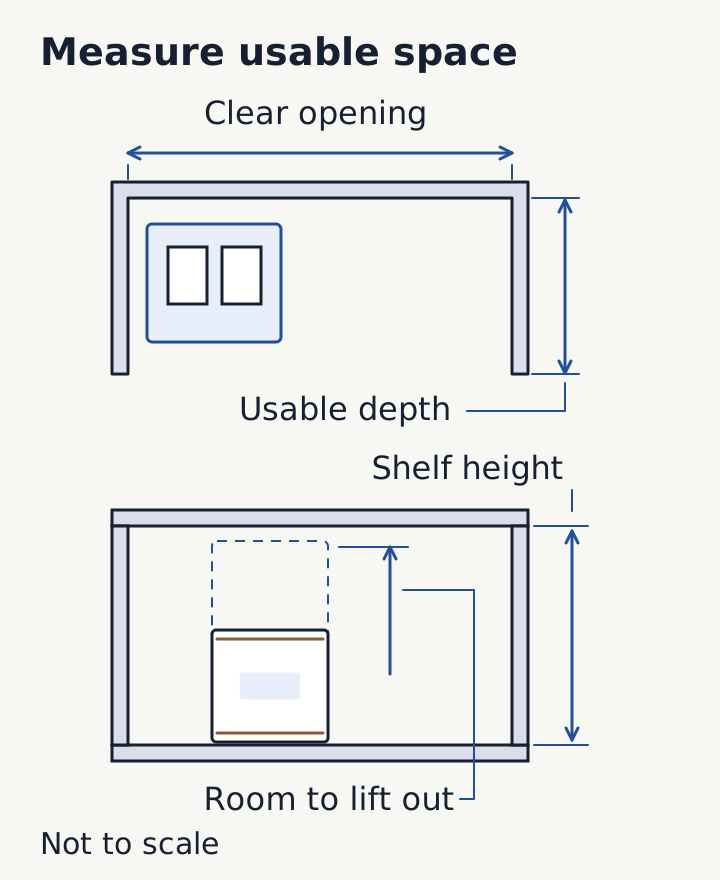
Common mistake: Measuring only an empty gap. A cart can fit there while its handle blocks a drawer, or a bin can fit on the shelf while its handle prevents removal.
Takeaway: Check the organizer’s full footprint, working space and exact installation instructions together.
Choose bins that solve an access problem
A kitchen storage bin can gather original packages without becoming the container that touches food. Decide which job you need: carrying packets together, retrieving items from a deep shelf, or holding loose food. Those uses require different checks; matching bins are optional.
For an outer organizer, try the packages inside before committing to it. Check whether you can read the labels, lift the loaded bin comfortably and remove it without unloading neighbouring items. A tall side wall may gather packets neatly while hiding shorter packages; a lower tray may work better for that particular shelf.
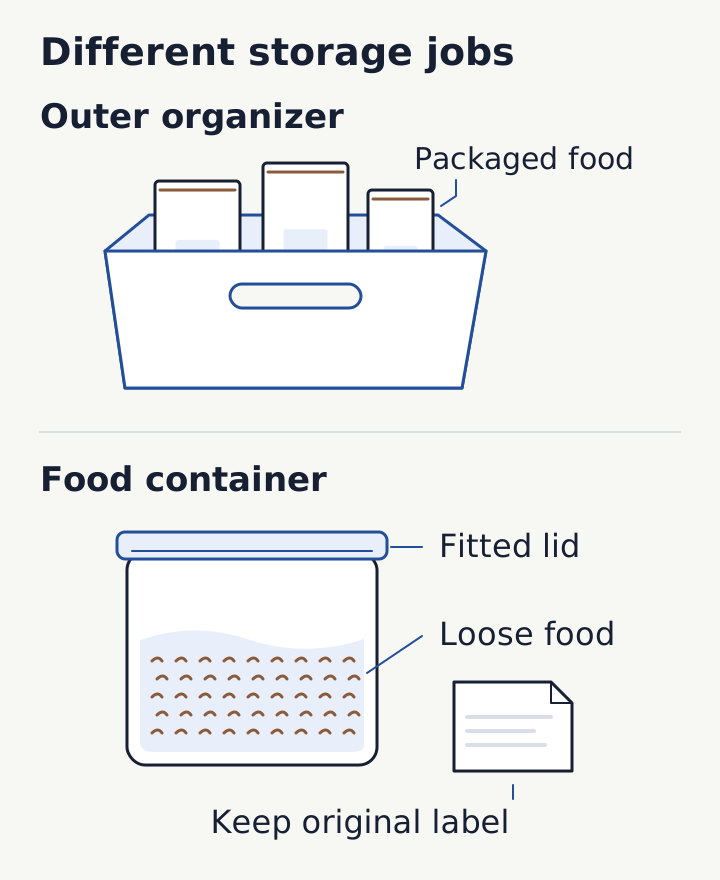
If loose food will touch the container, check its intended food use and care instructions. An organizer labelled for general household storage does not establish that use. The food-container guide explains what to check on the actual container and lid.
Keep the package’s storage directions, ingredient and allergen information, and identifying details accessible if you transfer food. Our suggestion is to retain the original label with the container rather than keeping only a decorative food-name sticker.
University of Minnesota Extension recommends storing insect-free food in tightly closed glass, metal or heavy plastic containers as part of pantry-pest prevention. An open basket around bags serves an organizing purpose; it does not provide those conditions. Likewise, airtight and vacuum-sealed storage describe different methods, and neither gives this layout guide grounds to extend a food’s storage life.
Takeaway: Use outer bins for access; assess food-contact containers and their closures separately.
Try the layout before committing to it
Try preparing an ordinary meal and putting groceries away with the proposed arrangement. This is a household usability check we suggest, not a product test. It should reveal whether the storage helps you retrieve and return food while leaving room to work.
- Put existing packages in the candidate cupboard or drawer before decanting anything.
- Retrieve your usual meal ingredients and return them. Move an item that requires unloading the entire shelf.
- Open the relevant doors and drawers through their normal movement. Check the proposed cart parking place too.
- Check that each regular user can reach the intended supplies comfortably. Reassign any awkward high storage.
- Write down where unopened replacements will live. Check that location before shopping again.
If groceries are split between the kitchen and an adjacent room, note the second location on your shopping list or inside the food cupboard. For broader stock and label habits, use the pantry-organization checklist.
Separate foods with their own storage needs during the trial. The homemade-bread guide addresses bread storage; placing a loaf beside dry packets does not give both foods the same keeping conditions.
Common mistake: Buying containers for an imagined future stockpile. Fit the foods you actually use first, then decide whether a reserve deserves some of the kitchen’s limited space.
Takeaway: Keep a layout only if you can cook, put food away and check supplies with it.
When this does not apply
These ideas apply to household space planning, not to deciding whether a food is safe or whether a shelf is structurally sound. Stop the layout exercise where the problem calls for food-specific guidance, pest treatment or product installation information.
- Food requiring refrigeration: Follow its label, including changes after opening. A closed cabinet is not an alternative to refrigeration.
- Dampness, damaged packages or insects: Investigate the condition before restocking. Minnesota Extension advises finding infestation sources and discarding infested food; a new bin does not resolve an existing infestation.
- Unknown load or mounting conditions: Obtain the product’s instructions before loading or installing it. This article supplies no structural calculations or substitute fixing method.
- Commercial food premises: This household guide does not cover business storage requirements.
For individual foods, consult their labels and FoodKeeper. A layout drawing cannot establish a storage deadline.
Takeaway: Resolve food-condition and installation questions before using the new storage location.
Common questions
What to do if you have no space for a pantry?
If neither the kitchen nor an adjacent room offers a suitable location, start with a shorter shopping list for the meals you plan to cook. We suggest fitting that list to the space you can use, rather than buying bulk packs and then trying to create somewhere for them.
What are some clever kitchen storage ideas?
For a kitchen used by several people, sketch the proposed food locations inside a cupboard door before moving anything. Ask each user to mark what they cannot reach or find. This is a planning suggestion: agree on the return places before rearranging everyone’s supplies.
What are some creative small pantry ideas?
For a shared kitchen, try a clearly labelled outer bin for each person’s packaged groceries, within the agreed space. Keep any refrigeration requirements separate. The benefit is an identifiable return place, rather than adding more categories or another piece of furniture.
What should not be stored in a pantry?
Check the product’s state, not just its category. If a sauce label says to refrigerate after opening, an opened bottle no longer belongs with its unopened replacement on the dry-food shelf. FDA’s label guidance applies to that change too; reassess the storage location when you open it.
What are some common pantry mistakes?
Changing every food location at once can make the new arrangement difficult to assess. We suggest trying one cupboard or drawer first. Ask whether that change makes a normal meal easier to prepare before repeating it elsewhere; keep the old arrangement where it already works.
What can I use instead of a pantry door?
An open shelf needs no door to function as an organizing location. A curtain may change its appearance, but it does not provide a sealed food container or establish suitable storage conditions. Judge the location, the food packaging and any installed hardware separately.
Takeaway: Adapt the storage to your household without changing the food’s requirements.
Method and sources
This guide combines public guidance with Read-N-Eat’s editorial space-planning suggestions. FDA supplies the label and chemical-separation principles, CPSC the furniture-securing guidance, Minnesota Extension the pantry-pest points, and the National Coffee Association the coffee-quality conditions. Sources and access dates are listed below.
The layouts and diagrams are illustrations, not measured kitchens or tested products. We have not tested organizers, inspected a reader’s shelves, measured any load capacity or established food-storage periods. Measurements and product-specific instructions come from the reader’s actual space and chosen organizer.
The questions above were recorded in US English Google People Also Ask research on October 6, 2026. Those questions establish reader demand; their search-result answers are not used as safety evidence. Sources were reviewed on October 8, 2026. For follow-up reading, use the food-storage guides.
Takeaway: Use this page to plan and check a layout, then follow the actual food and organizer instructions.
Explore more in Food Storage & Freezer Guides.
Official guidance and sources
Sources last checked October 8, 2026.
- Are You Storing Food Safely? , U.S. Food and Drug Administration (accessed October 8, 2026) Label storage instructions and separation from household chemicals.
- AnchorIt.gov , U.S. Consumer Product Safety Commission (accessed October 8, 2026) Follow furniture securing instructions; address tip-over risks.
- Storage and shelf life , National Coffee Association (accessed October 8, 2026) Coffee quality guidance on avoiding heat, light, air and moisture.
- Pantry pests — insects found in stored food , University of Minnesota Extension (accessed October 8, 2026) Appropriate closed food containers and finding sources of infestation.
- FoodKeeper App , FoodSafety.gov (accessed October 8, 2026) Food-specific freshness and quality guidance, separate from layout decisions.