
Sell By vs Use By: Retail Display Dates and Food Safety
A Sell-By date guides grocery store stock rotation with a home storage buffer, while Use-By marks peak quality or a safety limit on formula, meat, dairy, and California AB 660 packs.
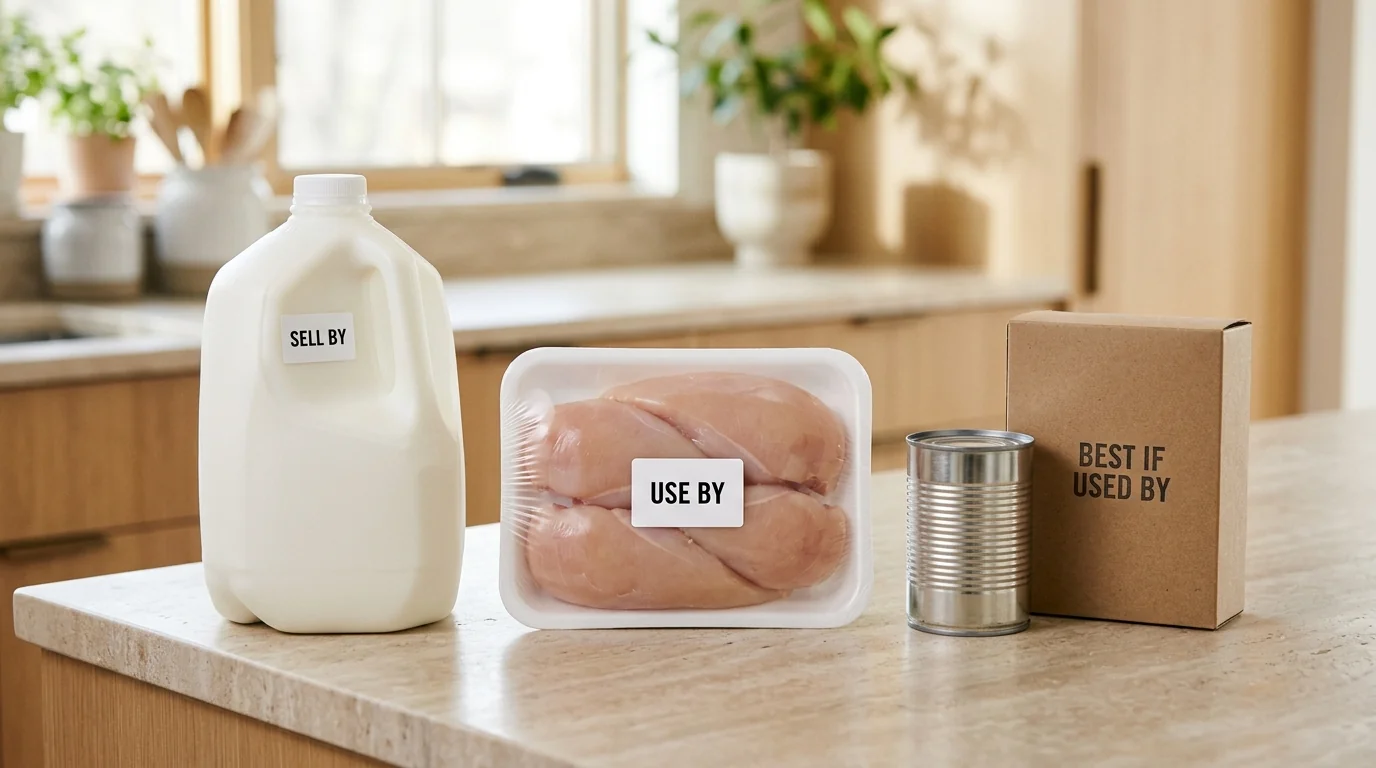
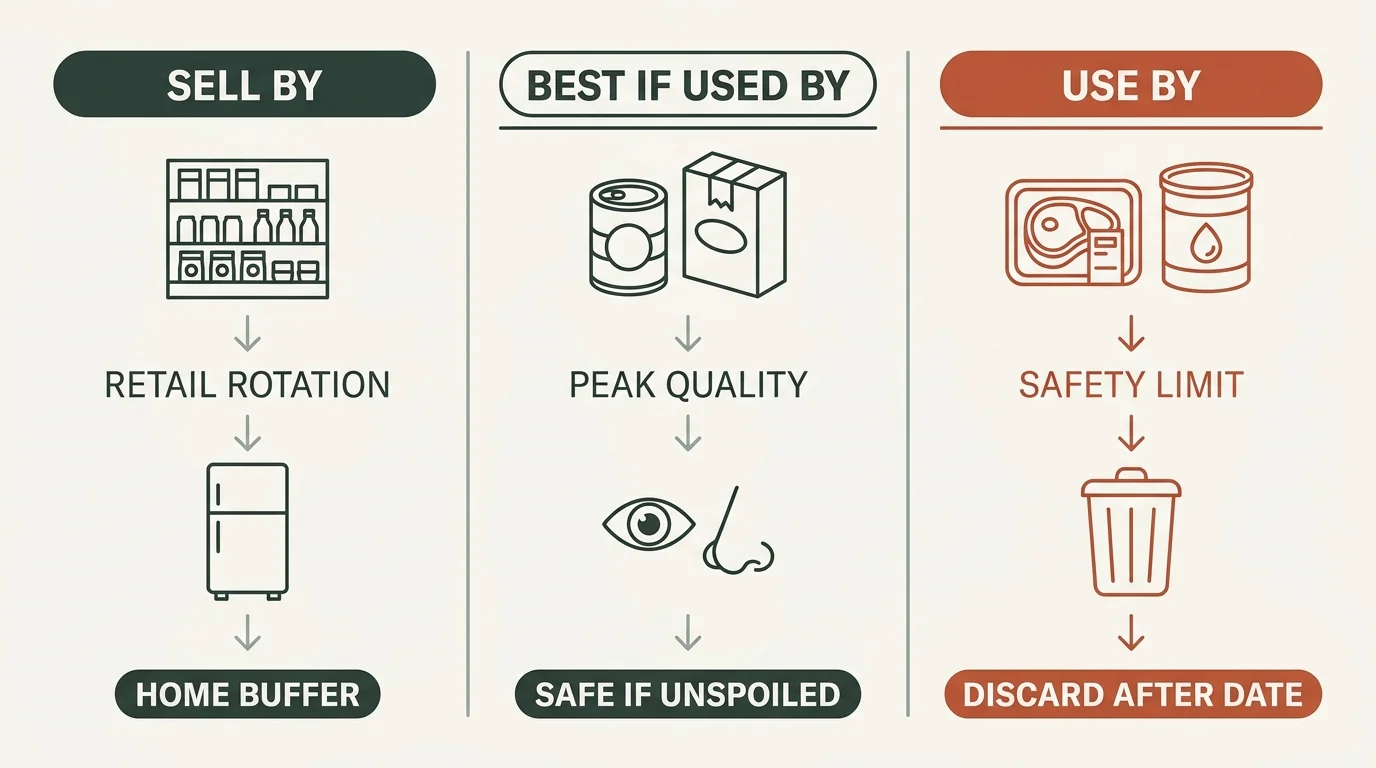
A Sell-By date is a retail guideline telling stores how long to display fresh or prepared food before quality deteriorates, leaving a few days for home storage after purchase. A Use-By date marks the final recommended date for consumption, signaling peak quality or a safety limit on baby formula, perishable meat, and dairy.
About 50 different date labels appear on food packaging in the United States, and most indicate when food tastes best rather than when it becomes unsafe. According to the FDA, consumer uncertainty about the meaning of date labels on packaged foods contributes to about 20 percent of food waste in the home, making clear date interpretation a practical part of everyday food packaging literacy.
Does a Sell-By Date Mean Food Expires That Day?
No, a Sell-By date does not mean food expires or becomes unsafe on that day. Like a Best if Used By date, a Sell-By stamp is an inventory-management guideline for grocery retailers rather than a safety label, and foods remain generally safe to eat afterward even as flavor or eye appeal begins to fade.
As UConn Extension’s food date guide explains, Sell-By dates are set with the assumption that the buyer may store or eat the food a few days after purchase. Under Food Rescue MAINE’s extension summary, a Sell-By date tells businesses not to market the product beyond that date for inventory management. If a grocery store rotates stock properly, the freshest packages sit at the back of the shelf or underneath older items.
U.S. federal law does not require food date labels except on infant formula and baby food, which must be pulled from shelves by their expiration date. For other foods, aside from dairy products in some states, freshness dating by manufacturers is voluntary. Meat, poultry, and egg products under Food Safety and Inspection Service (FSIS) jurisdiction may carry voluntary dates if they are not misleading and comply with FSIS regulations, and federal rules do not legally require stores to remove outdated products from shelves.
How Does Sell-By Compare With Best-By and Other Food Date Labels?
Sell-By guides store stock rotation on fresh or prepared foods, whereas Best if Used By and Best Before suggest when shelf-stable canned goods, dry goods, and condiments reach peak flavor, texture, and appearance. Neither phrase is a safety cutoff, unlike an explicit Expiration Date or safety-designated Use-By stamp.
According to Clemson Cooperative Extension, traditional USDA-aligned definitions treat Use-By as the latest date recommended for peak quality rather than a safety date except on infant formula, whereas UConn Extension notes that retailers commonly place Use-By on perishable meat and dairy to mark when consumption is not recommended due to safety concerns. Compare the seven main date stamps printed on U.S. food packages below:
Scroll horizontally to see all columns.
| Package Date Phrase | Primary Audience | Common Food Categories | Core Meaning | Household Action Past Date |
|---|---|---|---|---|
| Sell-By | Grocery retailers | Milk, eggs, cheese, fresh meat, prepared foods | How long the store should display the item for inventory rotation before quality deteriorates | Generally safe to eat for a home storage buffer if kept properly refrigerated and unspoiled |
| Best if Used By / Best Before | Consumers | Canned goods, dry goods, condiments, shelf-stable foods | When food is at peak flavor, texture, or appearance (also standardized for peak quality in California) | Generally safe to eat if the seal is intact and no spoilage signs appear |
| Use-By | Consumers | Infant formula, perishable meat and dairy, standardized safety packs | Peak-quality limit under USDA definitions, FDA-required nutrient cutoff on baby formula, and safety cutoff on perishable meat, dairy, and California AB 660 labels | Discard baby formula and safety-dated perishables; check cold storage and spoilage signs |
| Freeze-By | Consumers | Chilled raw meat, poultry, and perishables | When a food product should be frozen to preserve peak quality | Freeze by this date or follow fresh refrigerated cook-by timelines |
| Guaranteed Fresh | Consumers | Perishable bakery items and baked goods | Date after which peak freshness is no longer guaranteed | Still edible past the date if free of white, green, or black mold and off odors |
| Expiration Date | Retailers and consumers | Infant formula, baby food, selected regulated perishables | Absolute end of acceptable shelf life | Throw the product out once the expiration date has passed |
| Pack Date | Manufacturers and retailers | Commercial canned and boxed foods | Date the item was packed in YYMMDD, MMDDYY, or Julian 001 to 365 code | Not an expiration date; store canned goods at 65 degrees F and inspect can condition |
How to Read Coded Pack Dates and Julian Numbers
Canned and boxed staples carry a closed Pack date recording when the food was packed rather than an expiration date. Manufacturers format these codes by month, day, and year—such as YYMMDD or MMDDYY—or use three-digit Julian numbers running from 001 for January 1 through 365 for December 31.
How Long Does Food Keep After the Sell-By Date?
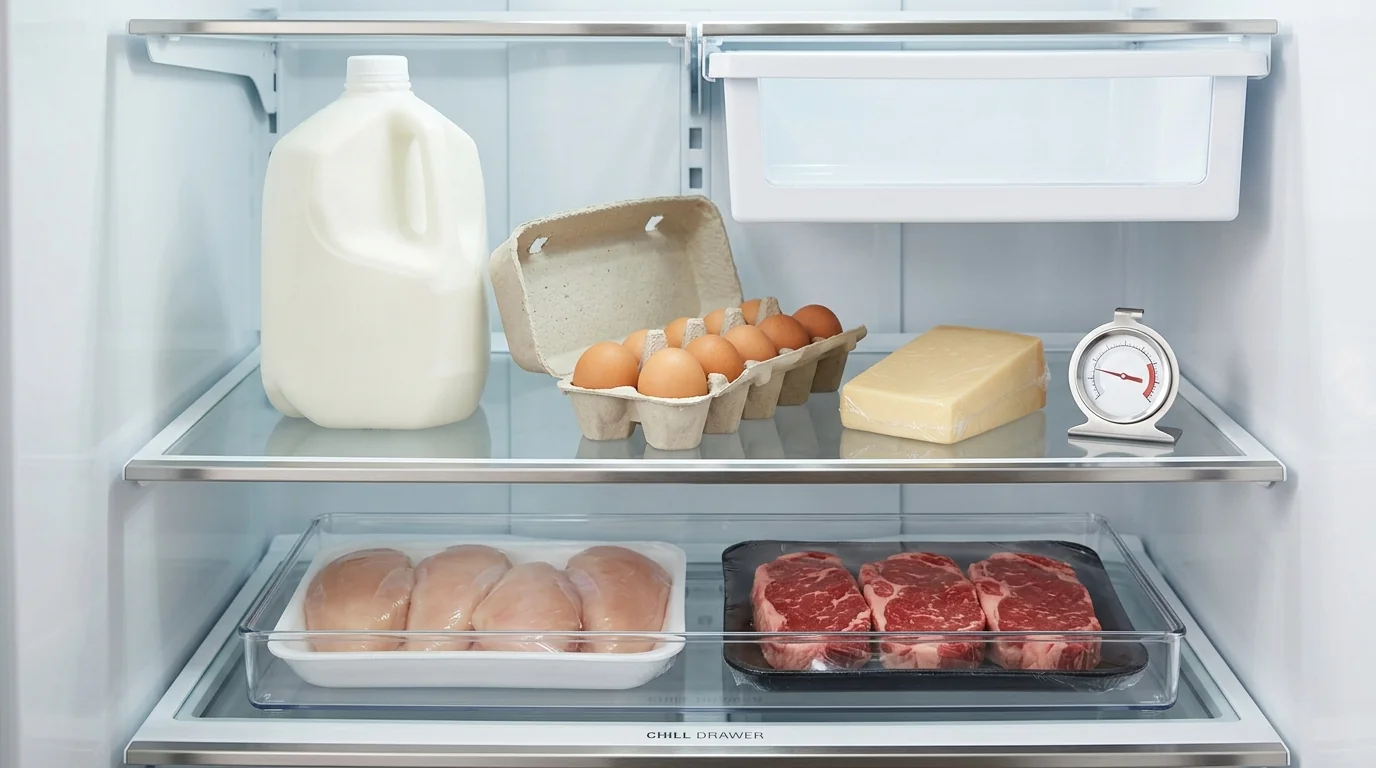
How long food keeps past its Sell-By date depends on the food category and uninterrupted temperature control at the store and at home. Under proper refrigeration, milk stays good for about a week past Sell-By, eggs keep three to five weeks, and hard cheeses last up to 4 months.
Foods that are not refrigerated properly—whether in transit, at the grocery store, or in a home kitchen—will not last as long regardless of what the printed freshness date says. Use the USDA FSIS and UConn Extension storage windows below to plan refrigerator turnover and dry shelf conditions:
Scroll horizontally to see all columns.
| Food Category | Storage Condition | Post-Sell-By or Total Storage Window | Key Quality and Safety Notes |
|---|---|---|---|
| Milk | Properly refrigerated | About a week past Sell-By date | Discard sooner if off smell or texture develops; opening shortens remaining life |
| Hard cheeses | Properly refrigerated | Up to 4 months past Sell-By date | Longer shelf life than soft cheeses; check for mold growth |
| Soft cheeses | Properly refrigerated | Much shorter than hard cheeses (a few weeks past Sell-By) | Spoils faster than hard cheese; inspect for mold, off smell, or color change |
| Shell eggs | Properly refrigerated | Three to five weeks beyond Sell-By date | Keep refrigerated continuously from purchase until cooking |
| Fresh chicken, turkey, and ground meats | Properly refrigerated | Cook or freeze within two days | Short refrigerated window regardless of retail display stamp |
| Fresh beef, pork, and lamb | Properly refrigerated | Cook or freeze within three to five days | Whole red-meat cuts keep slightly longer than ground meats or poultry |
| Most commercial canned goods | Cool pantry at 65 degrees F | Two to five years under optimal temperature | Higher storage temperatures can reduce shelf life by up to 50 percent |
| High-acid canned foods (fruits and tomatoes) | Cool pantry at 65 degrees F | 12 to 18 months (about one and a half years) | High acid shortens optimal canned storage compared with other commercial cans |
For dry and canned reserves, group unopened replacements behind active packages using our pantry organization guide so older cans at 65 degrees F are used before newer stock.
Is Food Safe Past the Use-By Date?
Safety past a Use-By date depends on the food and jurisdiction: baby formula should not be used after its FDA-required Use-By date because nutrients may decline, and perishable meat, dairy, and California AB 660 Use-By packages treat the date as a food-safety boundary rather than an optional quality suggestion.
For non-perishable or general foods outside standardized state safety laws, Cooperative Extension guidance aligned with USDA definitions notes that Use-By marks the final date recommended for peak quality. Whenever an explicit Expiration Date appears on a package, treat that date as absolute and discard the item once passed. Across every food group, inspect items before eating for visible white, green, or black mold as well as off smell, texture, or color.
When Opened or Damaged Packaging Overrides the Printed Date
Once a food package is opened, many printed dates become obsolete because the exposed contents become perishable and should be used as quickly as possible. When transferring opened portions or cooked dishes into containers, record the date opened or cooked following our how to label leftovers system instead of relying on the original factory stamp.
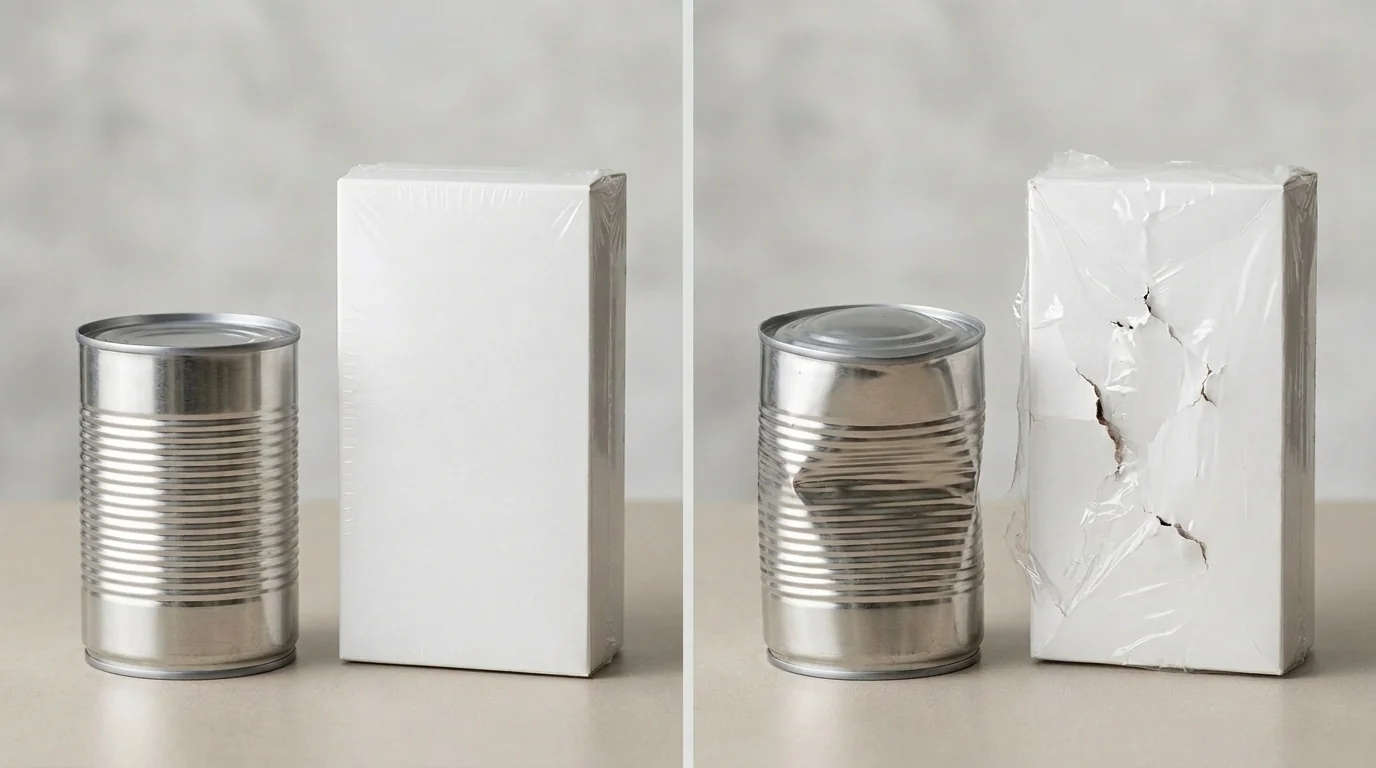
Physical seal damage also invalidates any future date printed on the label. Punctured or torn cellophane, plastic, or box packaging penetrates the barrier seal—much like a failed heat seal in sealed snack bags—and drastically shortens the shelf life of the contents. Whatever the printed expiration or Best-By date says, do not open or use metal cans that are bulging, oozing from the seams, or heavily dented.
How Do Sell-By and Use-By Apply to Meat, Poultry, and Milk?
On fresh meat, poultry, and dairy, printed Sell-By and Use-By dates work alongside strict cold-storage windows and sensory checks. Fresh chicken, turkey, and ground meats should be cooked or frozen within two days, fresh beef, pork, and lamb within three to five days, and refrigerated milk lasts about a week past Sell-By.
Fresh Meat, Poultry, and Freeze-By Dates
Meat and poultry products under USDA FSIS oversight may carry voluntary dates, pairing a retail Sell-By rotation stamp or a perishable Use-By cutoff with a Freeze-By date showing when to freeze the product to preserve peak quality. Because raw poultry and ground meats have only a two-day refrigerated window and whole beef, pork, and lamb cuts have three to five days, move unused packs to the freezer promptly and wrap them tightly to prevent moisture loss as detailed in our freezer burn and wrap guide.
Milk, Cheese, and State Dairy Dating Rules
While federal freshness dating is voluntary outside infant formula and baby food, some states regulate date labels on dairy products. An unopened carton of properly refrigerated milk stays good for about a week after its Sell-By date, and hard cheeses last up to 4 months past Sell-By, whereas soft cheeses spoil much sooner. Once a milk jug or cheese wrapper is opened, the printed date no longer governs remaining shelf life, and any dairy with mold or off smell, texture, or color should be discarded.
How Are U.S. Food Date Labels Changing in 2026?
Starting July 1, 2026, California AB 660 bans consumer-facing Sell-By dates and requires human food sold in California, except eggs and infant formula, to carry standardized phrases: BEST if Used by for peak quality or USE by when food is no longer safe to eat.
According to the California Department of Food and Agriculture AB 660 summary, manufacturers may also print BEST if Used or Frozen by for quality and USE by or Freeze by for safety, while still using coded Sell-By dates that preserve stock-rotation data for retailers without confusing shoppers into throwing away wholesome food. CalRecycle reports that 2.5 billion meals worth of unspoiled food are thrown away each year, contributing to organic waste that makes up 48% of California landfill disposal and 41% of state methane emissions—a greenhouse gas with 84 times the climate-heating power of carbon dioxide.
At the national level, lawmakers introduced the federal Food Date Labeling Act of 2025 to establish the same two-phrase split across the United States—BEST if Used By for quality and USE By for safety—though the federal bill has not yet passed.
Frequently Asked Questions
Can you eat food after the Sell-By date?
Yes, foods are generally safe to eat after their Sell-By date if kept at the proper temperature and free of spoilage signs, because Sell-By guides retail display rotation and assumes a few days of home storage after purchase. Properly refrigerated milk lasts about a week past Sell-By, eggs keep three to five weeks, and hard cheeses last up to 4 months.
Is food safe one day after a Use-By date?
Do not use baby formula past its FDA-required Use-By date because nutrients may decline afterward, and do not eat food past a Use-By safety date under California AB 660 or on perishable meat and dairy where Use-By marks safety concerns. For shelf-stable foods under traditional USDA definitions where Use-By denotes peak quality, check package integrity and inspect for mold or off odor, texture, and color.
What is the difference between Best if Used By and Use-By?
Best if Used By (or Best Before) appears mainly on canned, dry, and shelf-stable goods to indicate peak flavor, texture, and appearance rather than food safety. Use-By marks the end of recommended consumption and serves as the FDA-required nutrient cutoff on baby formula and the safety discard label on perishable meat, dairy, and California AB 660 safety-dated foods.
Does a printed Sell-By or Best-By date still apply after opening the package?
No, once a food package is opened, many printed dates become obsolete because exposing the contents to air and handling makes the food perishable. Use opened foods as quickly as possible and keep perishables properly refrigerated.
Why is California banning Sell-By dates on July 1, 2026?
California AB 660 bans consumer-facing Sell-By dates starting July 1, 2026 (while allowing coded dates for retail stock rotation) to stop shoppers from mistaking store display dates for spoilage deadlines. CalRecycle estimates 2.5 billion meals of unspoiled food are discarded annually, driving 48% of California landfill waste and 41% of state methane emissions.
Explore more in Food Packaging Explained.
Sources
Sources last checked November 18, 2026.
- Expiration, Use-By and Sell-By Dates: What Do They Really Mean? , UConn Extension (accessed November 18, 2026)
- Food Date Labeling (AB 660) , California Department of Food and Agriculture (accessed November 18, 2026)
- How to Decode Food Labels: Sell-by, Use-by, and Best-by Explained , Clemson Cooperative Extension (accessed November 18, 2026)
- Food Dates: The Real Truth , University of Maine (Food Rescue MAINE) (accessed November 18, 2026)