
Mylar Bags for Dry Food Storage: Foil Barriers, Mil Thickness & Heat Seal Checks
Compare named pouch materials, review dry-food suitability, and work through pouch preparation and heat-seal checks before stocking your pantry.
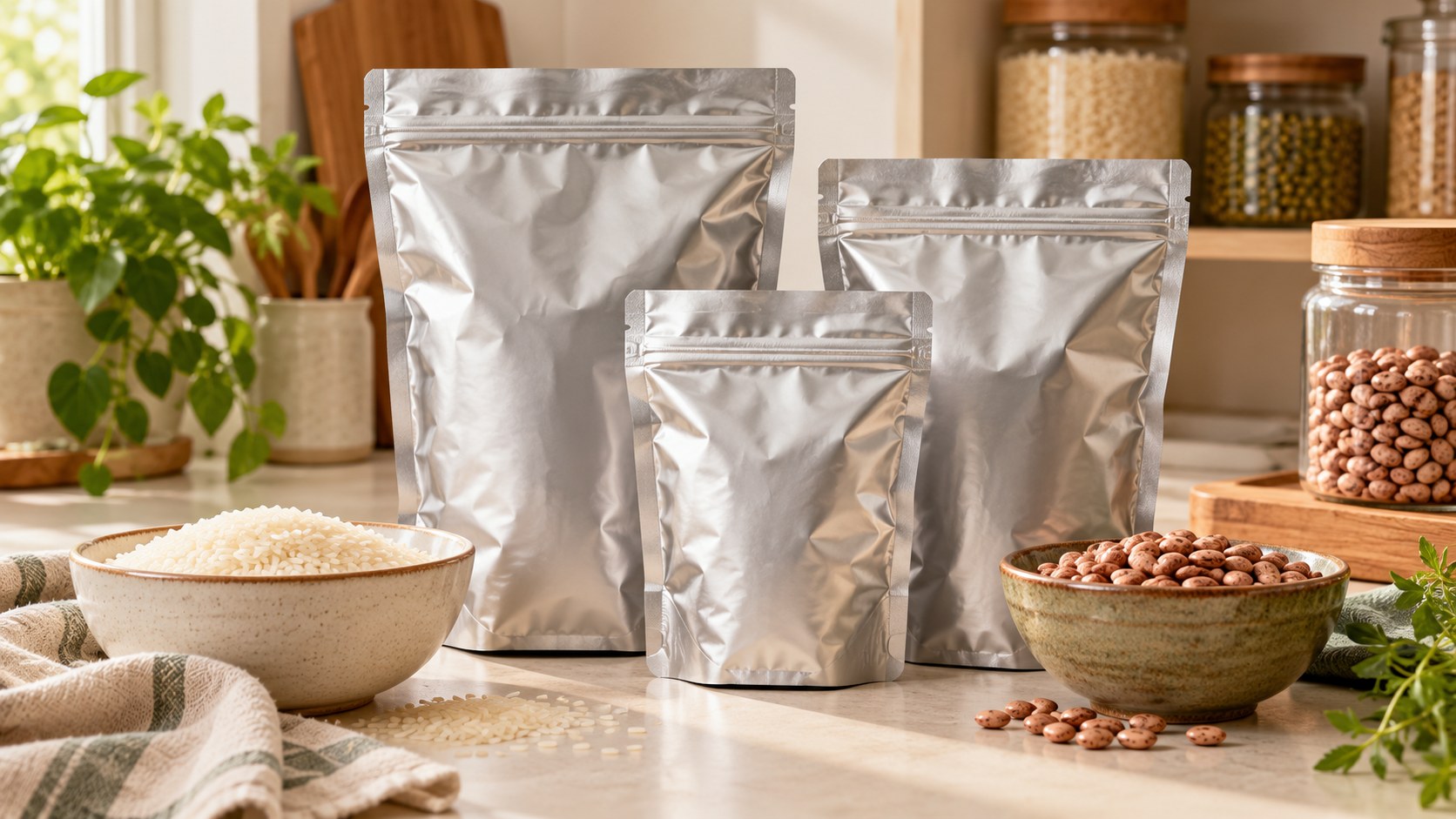
Choose mylar bags by working through the material, the food, and the sealing instructions. Start with the foil barrier, then use the named material examples and pouch checks below to organize your purchase and packing routine.
Aluminum foil provides a barrier to light, gases, and moisture. In foil-laminate pouches, the foil layer dramatically reduces oxygen and moisture transmission through the film.
For more kitchen storage guides, visit our food storage hub.
What to check in the pouch material
In the Church home-storage foil pouches, a food-grade plastic layer separates the food from the aluminum.
Ask for the bag’s material construction and food-contact information. Read the foil-layer specification alongside the total pouch thickness.
Foil and metallized-film descriptions
Mylar MC2 polyester film has a vacuum-deposited aluminum layer on one side. Mylar MC2 has not been assessed against Food Contact Legislation.
Keep material identification and food-contact suitability as separate questions when reading a product sheet.
Mil thickness: named material examples
| Material or pouch system | Published thickness |
|---|---|
| IMPAK PAKVF4 | IMPAK lists PAKVF4 total thickness as 4.3 mil. |
| IMPAK PAKVF4C | IMPAK lists PAKVF4C total thickness as 5.0 mil. |
| Church home-storage foil pouches | The Church home-storage pouch material is 7 mils thick (178 microns). |
The PAKVF4C foil layer is 0.00035 inches thick.
When comparing listings, record the exact material name beside each thickness value. Keep a separate field for the foil layer.
Match the food to the pouch guidance
The Church foil-pouch guidance specifies dry foods with about 10 percent moisture or less that are shelf-stable and low in oil.
Foods stored in airtight containers with oxygen absorbers must be dry, with about 10 percent moisture content or less. Storing moist products in packaging that reduces oxygen can result in botulism poisoning.
Where possible, pack dried foods in portions that can be used after opening without further repackaging and storage.
Check the zipper and heat-sealing instructions
The IMPAK Hook2Hook zipper is not fully air and water tight. The Hook2Hook pouch has space above the zipper for heat sealing.
Identify the filling opening and the intended heat-seal area before packing.
Follow the instructions for the named pouch system
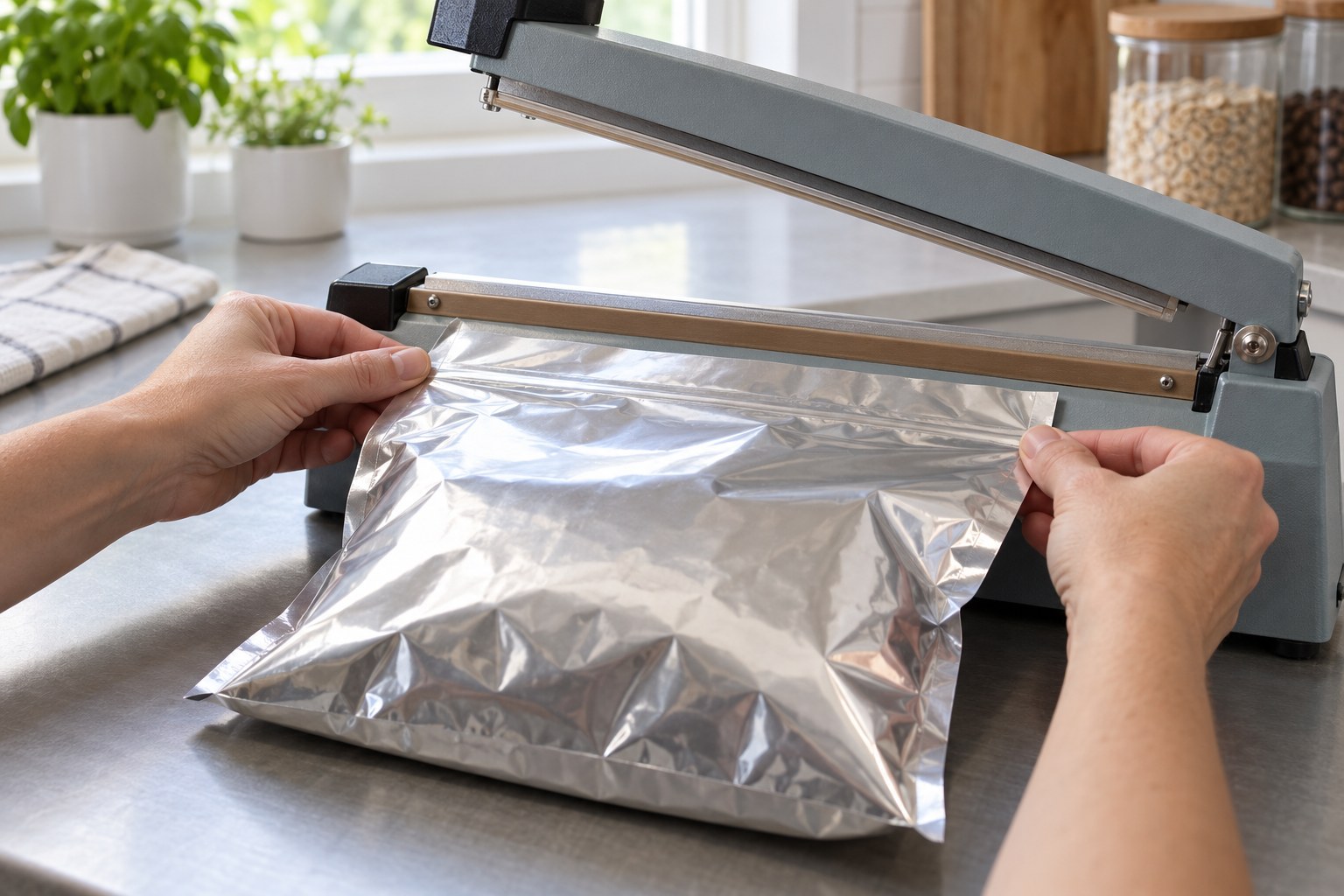
For the Church foil-pouch system, use an impulse sealer. For these pouches, do not use an iron or other household heating device: it will not provide an adequate seal, especially for powdered products.
For IMPAK PAKVF4, the recommended heat-seal conditions are:
- The recommended heat-seal temperature is 400°F.
- The recommended heat-seal pressure is 40 PSI.
- The recommended heat-seal time is 1 sec.
Keep that temperature, pressure, and time together when reading the material specification. For your packing session, use the instructions for the pouch and sealer you have selected.
Prepare, seal, and inspect the pouch
Use the following checklist with the Church foil-pouch instructions.
Clear the sealing area
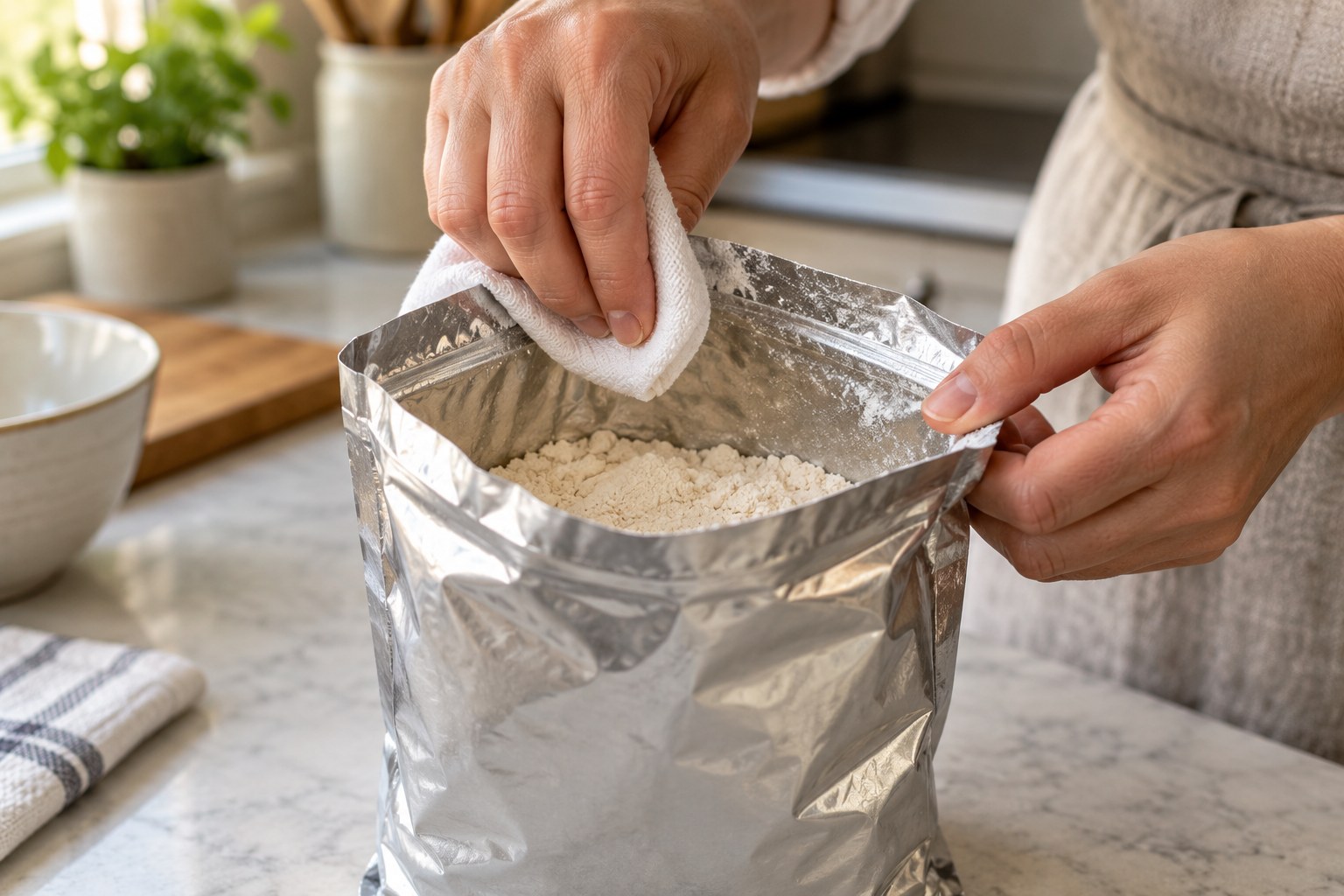
For powdered products, wipe dust from inside the seal area with a dry towel. If the pouch top will not flatten and fold over easily, check whether the pouch is too full.
Support and flatten the pouch
Support the pouch weight on the table or shelf while sealing. Stretch outward on the side seams to remove wrinkles. Remove the pouch when the sealing cycle is finished.
Inspect the seam
Inspect the seams for burned spots and compare their appearance with the factory seams. Check whether the seam can be pulled apart. Press on the pouch to check whether air or product can be forced out.
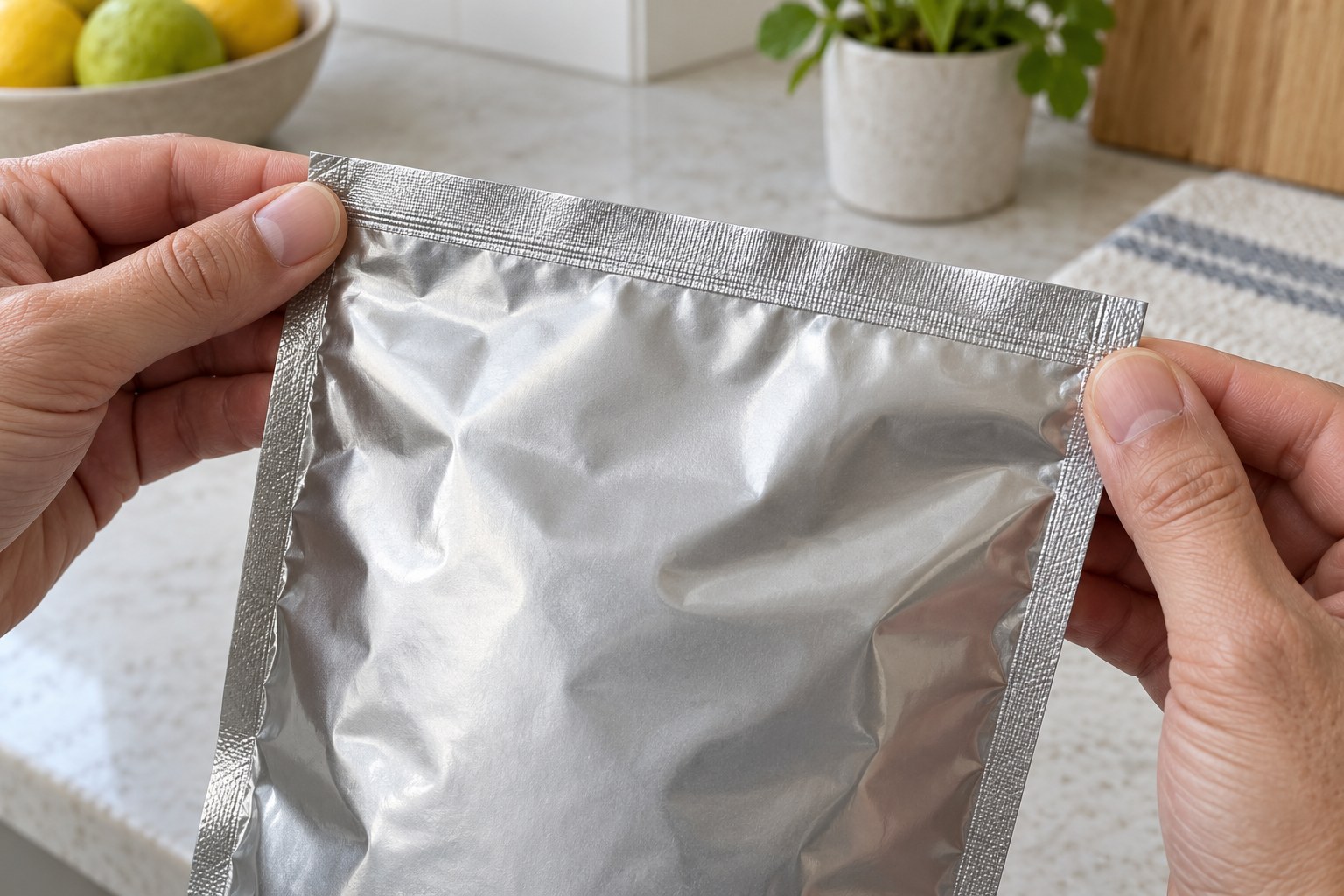
If seams pull apart, check for inadequate cleaning of the seam area or overfilling.
Label and put away
Label the pouch with its contents and packaging date. Store these pouches in a cool, dry, rodent-free area. These pouches are not rodent proof.
Questions to keep beside your packing station
What thickness should I look for?
As a named example, the Church home-storage foil pouches use material that is 7 mils thick (178 microns). See the named material examples table above for comparison.
Compare the named examples above with the material offered in your listing, then match it to the sealing instructions you will use.
Can I rely on the zipper?
For the IMPAK Hook2Hook design, the zipper is not fully air and water tight.
Locate the designated heat-seal area in the pouch instructions before filling.
What should I check if a seam pulls apart?
For the Church pouch system, check seam-area cleaning and overfill when seams pull apart.
Return to the cleaning, filling, and positioning checklist before continuing.
Your purchasing and packing checklist
- Record the pouch material name and food-contact information.
- Record total thickness and foil-layer thickness separately.
- Match your food to the dry-food guidance above.
- Keep the pouch and sealer instructions at the packing station.
- Work through the preparation and seam checks before putting pouches away.
Continue with our food packaging guides or return to food storage.
Explore more in Food Storage & Freezer Guides.
Official guidance and sources
Sources last checked October 28, 2026.
- European Aluminium Foil Association — Properties
- USU Extension — Packaging Foods
- Church of Jesus Christ — Long-Term Food and Water Storage
- IMPAK — PAKVF4 material specification
- IMPAK — PAKVF4C material specification
- Mylar Specialty Films — Mylar MC2 Product Information Sheet
- USU Extension — How Can I Get the Most Out of My Food Storage
- IMPAK — Hook2Hook Zippers