
Freezer Inventory for Meal Planning: Track Portions, Locations and Dates
Count each freezer package you can name, then record the portions and the bin. Write a frozen date only when you know it. The use-by cell stays your own note.
Updated October 2026
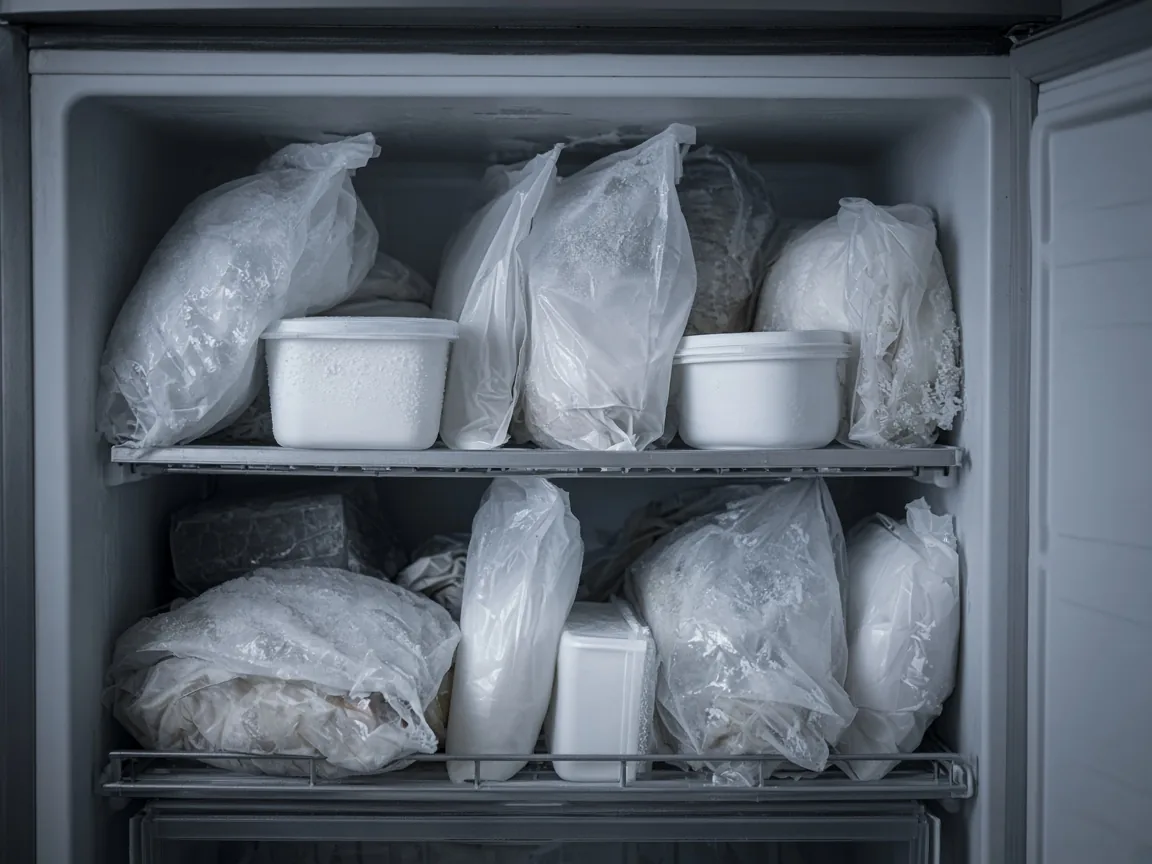
An uncounted freezer wastes food you already stored. Write one row for each package you can name, with the portion count you can see, the bin, and a frozen date only when you know that day.
This page is for a home cook in the United States who needs to see what is still in the freezer before planning a meal or buying the same food again. It covers the first count, how one row changes when a package goes in or comes out, and why the use-by cell is a note. It does not set an official expiration date, and it does not decide that a package is safe to eat.
Count the packages you can name before you buy more of the same food. USDA Food Safety and Inspection Service, on Freezing and Food Safety, last updated August 9, 2024, says food stored constantly at 0°F will always be safe, and that only the quality suffers with lengthy freezer storage. Recommended times on that page are for quality only. This sheet does not copy those months into the use-by cell. Write a portion count and a bin for each package you can see. Write a frozen date only when you already know the day. The use-by cell on this sheet is your own note, not an official expiration date.
What do you write on the first count?
Open the freezer and give one row to each package you can name. If two packages are the same food and sit in the same place, one row can hold both, and the amount is the count you see. If you cannot tell what is inside, do not invent a name. Leave that package off the sheet until you know.
Scroll horizontally to see all columns.
| Column on the sheet | Write this | Leave the cell blank when |
|---|---|---|
| Item | The name you use for that package | You cannot tell what is inside |
| Amount / portions | The packages or servings you can see, using one unit on that row | You have not counted them |
| Date frozen | The packaging day you already know | You do not know the day |
| Use by (your own note) | A reminder you choose to write | You want the sheet to supply an official date |
| Shelf or bin | The place the package is sitting now | You have not checked where it sits |
| Notes | Added ingredients, or the form, such as sliced, when you know them | You do not know them |
The National Center for Home Food Preservation says to pack foods in quantities that will be used for a single meal, and to label the product name, any added ingredients, the packaging date, the number of servings or the amount, and the form of the food. Those words belong on the package. The leftover label guide keeps the cooking date, the frozen date, and the thawed date on separate lines. This sheet records the count and the place. It does not replace that label.
How does the same row change when food goes in or out?
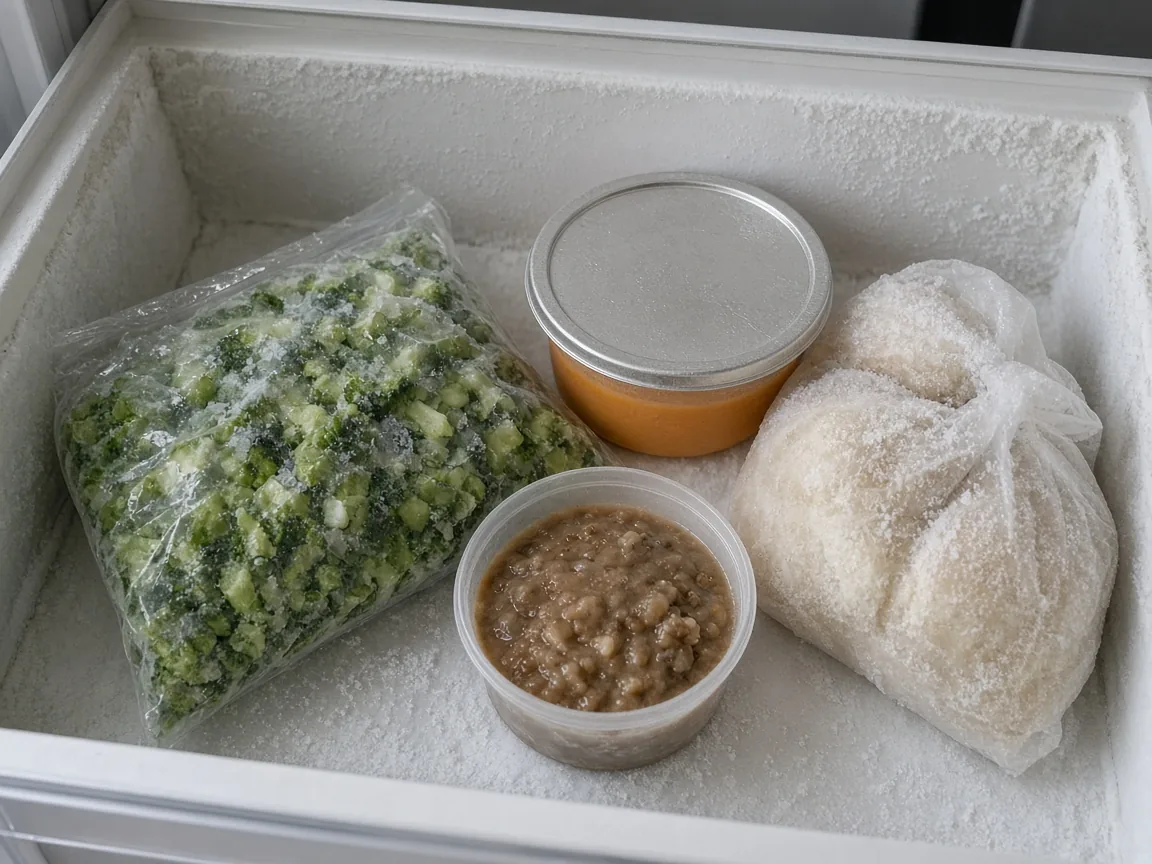
Keep one row for one item in one bin. When more of that same item goes into that bin, add to the amount. When a package comes out, subtract it. Change the shelf or bin cell on the day you move the package.
The next table is a counting example for one item. The figures 4, 6, and 5 show the arithmetic only. They are not a recommended stock, a serving size, or a storage limit. Date frozen and use-by stay blank because this example does not know those facts.
Scroll horizontally to see all columns.
| Moment | Amount / portions | Shelf or bin | Date frozen | Use by (your own note) |
|---|---|---|---|---|
| After the first count of that item in that bin | 4 | bottom bin | ||
| After two more packages of that same item go into the same bin | 6 | bottom bin | ||
| After one of those packages comes out | 5 | bottom bin |
A different food gets its own row. Do not add its count to this one. If you have not counted the packages, leave the amount blank until you do. Mixing packages and servings on the same row makes the next total meaningless, so keep the unit you wrote on the first count.
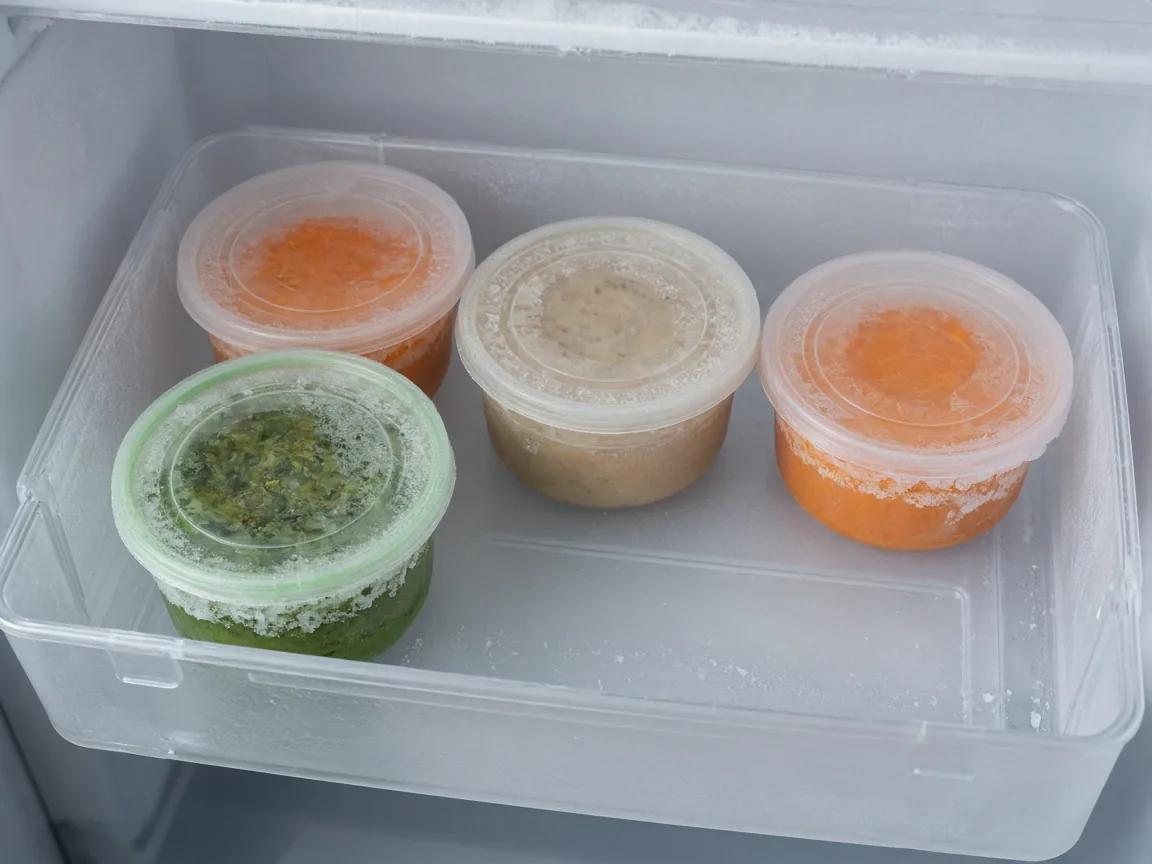
USDA says never to stack packages that are still freezing. Spread them in one layer, and stack them only after they are frozen solid. Ideally, a food 2 inches thick should freeze completely in about 2 hours. That line is about freezing speed on the USDA page last updated August 9, 2024. It is not a portion count, and it is not a date for the sheet. After the packages are solid, write the bin where you actually put them.
Why does the use-by cell stay blank?
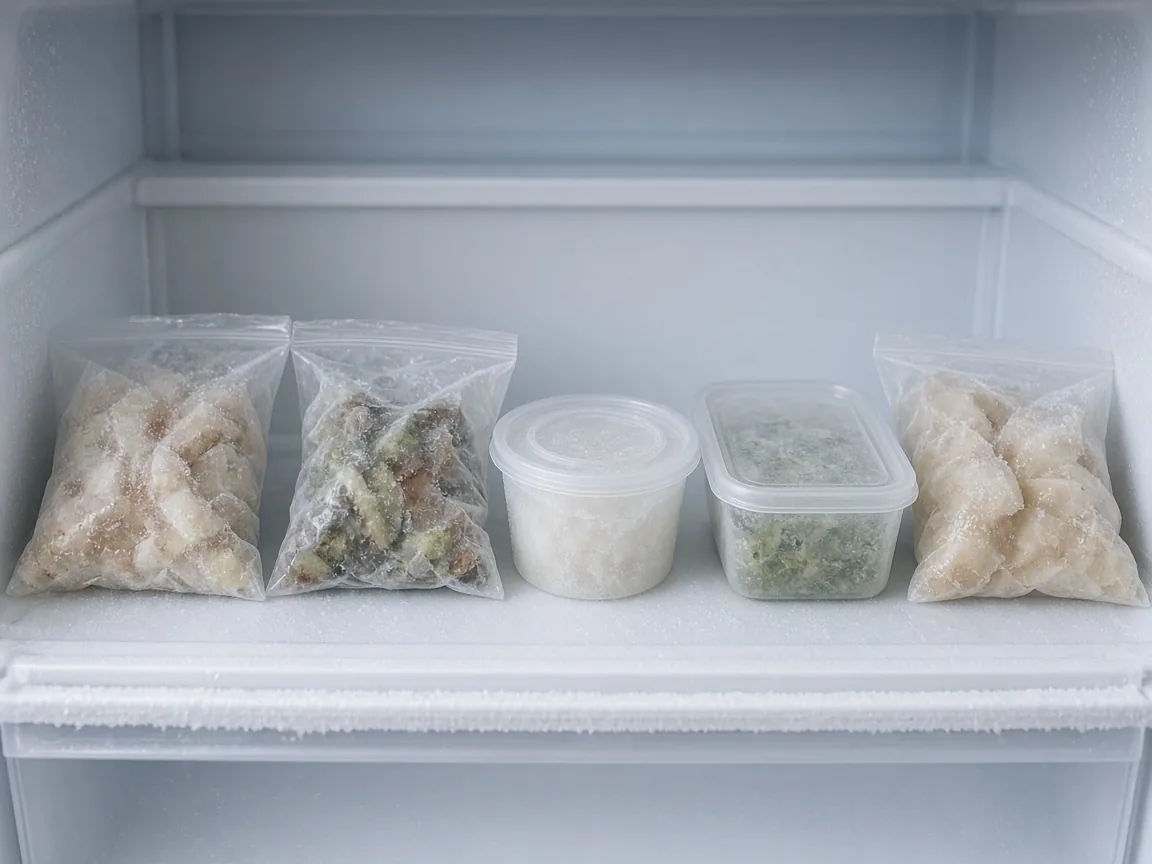
The column is labeled “Use by (your own note).” A date you type there is a reminder. It is not a result from this site, and it is not the USDA quality chart.
USDA says recommended freezer storage times are for quality only, because freezing keeps food safe almost indefinitely. The chart on that page lists quality months for named foods. This inventory does not copy those months into the use-by cell. If a food is not listed on the chart, that page says to judge quality after thawing and to check the odor first. Some foods develop a rancid or off odor when frozen too long and should be discarded. The sheet does not make that judgment for you.
A use-by note also does not measure the freezer. USDA says to keep an appliance thermometer in the freezing compartment or freezer. Use a free-standing freezer set at 0°F or below for long-term storage. If a refrigerator freezing compartment cannot maintain 0°F, or the door is opened often, USDA says to use it for short-term storage and to eat those foods as soon as possible for best quality. Those are conditions on the USDA page. They are not dates to invent when the package has none.
Freezer burn does not make food unsafe. USDA describes it as grayish-brown leathery spots caused by air on the surface, and as dryness. Cut freezer-burned portions away before or after cooking. Heavily freezer-burned foods may have to be discarded for quality. A note can say what you see. The note does not turn that spot into a safety decision.
Cool food before you package it. The extension page says cooling speeds freezing and helps retain color, flavor, and texture. Pack an amount you will use for one meal. Cooling and reheating steps for a cooked meal are in the cooked meals guide.
How do you pick the next meal from the rows?
Choose a row whose amount is still a number you counted. If that row has a frozen date you wrote, you can see which packages of that item went in earlier. If the date cell is blank, the sheet cannot tell you which package is older.
When the amount reaches 0, that row no longer describes food in the freezer. Clear it, or leave 0, so the next shopping trip does not treat the food as still there. Taking one package out for a meal means you change the amount the same day.
This page does not say a row is ready to eat. For soup, portion and headspace stay with the soup portion guide.
What does the sheet under this article do?
The table under this article is the inventory. It opens with empty rows. You type the item, the amount, the frozen date, your own use-by note, the shelf or bin, and notes.
With JavaScript, the rows stay in this browser on this device. Another browser or phone does not receive them. Add row inserts a line. Remove drops one line, or clears the last remaining line. Clear all asks you to confirm, then empties the sheet. Print prints the rows. Download CSV saves a file named freezer-inventory.csv with those column headings. If this browser cannot store the rows, you can still print or download during the visit.
Without JavaScript, the empty table is still on the page. Use the browser print menu for a blank sheet.
Count the packages you can name, write the bin, leave unknown dates blank, and change the amount when a package goes in or comes out.
How these figures were limited
The 0°F condition, the statement that quality suffers while safety holds for food kept frozen, the quality-only storage times, the one-layer freezing instruction, the 2-inch and about-2-hour line, freezer-burn appearance, and the thermometer instruction come from USDA FSIS, “Freezing and Food Safety,” last updated August 9, 2024. The saved copy was read on October 14, 2026. Quality months from that page’s chart are not copied into the use-by column.
Cooling before packaging, meal-sized packs, and the label lines (name, added ingredients, packaging date, servings or amount, and form) come from the National Center for Home Food Preservation, “Packaging and Labeling Foods,” extracted from So Easy to Preserve, 6th edition, 2014. That saved copy was read on October 14, 2026.
The figures 4, 6, and 5 are a counting example. This site did not inventory a freezer and did not run a storage test. Blank cells are facts those pages do not give for this sheet. When a package carries its own instructions, follow those instructions.
Explore more in Food Storage & Freezer Guides.
Freezer Inventory
The dates you enter are your own records. Check official guidance for how long foods keep.
| Item | Amount / portions | Date frozen | Use by (your own note) | Shelf or bin | Notes | Remove |
|---|---|---|---|---|---|---|
Printed on ______________
Without JavaScript you can still print this blank sheet from your browser's print menu.
Official guidance and sources
Sources last checked October 14, 2026.
- Freezing and Food Safety , USDA Food Safety and Inspection Service (accessed October 11, 2026) Food held constantly at 0°F stays safe and quality suffers with lengthy storage. Quality times are not safety cutoffs. Spread packages in one layer until frozen solid. A food 2 inches thick should freeze in about 2 hours. Freezer burn is a dry spot, not a safety failure. Page last updated August 9, 2024. Saved copy read again on October 14, 2026.
- Packaging and Labeling Foods , National Center for Home Food Preservation, University of Georgia (accessed October 11, 2026) Cool food before packaging. Pack a quantity for one meal. Label the product name, added ingredients, packaging date, servings or amount, and form. Extracted from So Easy to Preserve, 6th edition, 2014. Read again on October 14, 2026.