
How to Freeze Tomato Sauce
Cool, portion, pack and thaw cooked tomato sauce for your next meal.
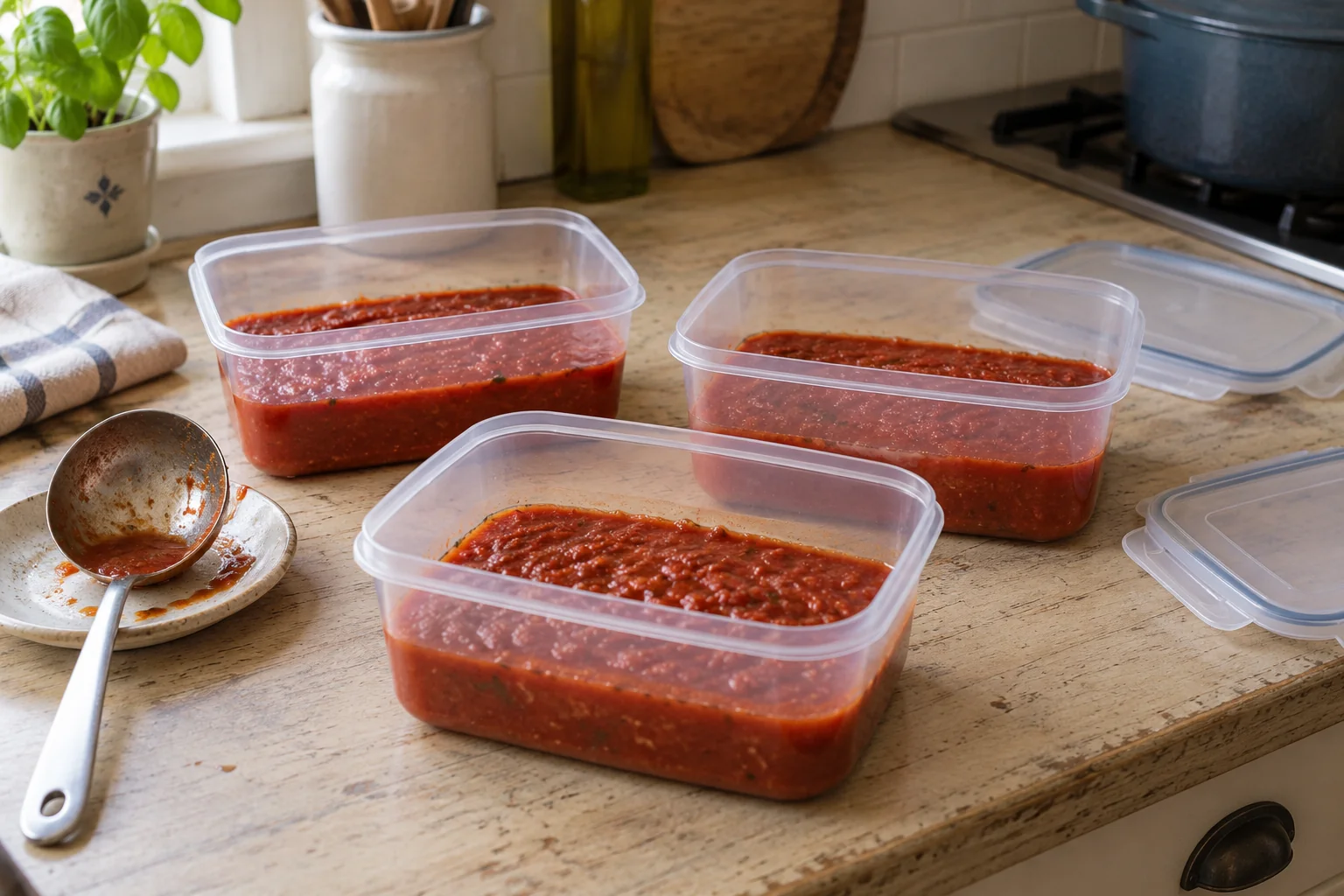
Freezing sauce in one oversized block wastes time when the next meal needs only a little. To freeze tomato sauce, cool it promptly in shallow containers, pack the chilled sauce in meal-sized freezer bags or containers, leave room for expansion, seal and label it, then freeze.
This guide covers already-cooked, plain tomato sauce, whether made from fresh or canned tomatoes. Refrigerate it within 2 hours of cooking, or within 1 hour above 90°F, following USDA leftover guidance, checked October 16, 2026. Cooling for freezer packaging happens in the refrigerator or with rapid chilling; it does not mean leaving a pot on the counter until completely cold. The steps below separate that cooling stage from choosing a package and thawing dinner.
Is this cooked sauce or raw tomatoes for later?
Use the cooked-leftover workflow for finished sauce. Freezing fresh tomatoes for future cooking is a different job.
Scroll horizontally to see all columns.
| What you have | What you are storing | Which instructions apply |
|---|---|---|
| A pot of cooked plain tomato sauce | A finished sauce to reheat | The cooling, portioning and packaging steps below |
| Whole or chopped raw tomatoes | Ingredients for a future sauce | NCHFP’s tomato-freezing procedures; thawed tomatoes are intended for cooking, rather than a firm fresh texture |
| Tomato juice or stewed tomatoes | A different prepared tomato product | The matching NCHFP procedure, rather than treating it as finished pasta sauce |
| Sauce containing meat or cream | A different recipe with additional handling or texture questions | Use recipe-specific instructions; this guide does not establish a separate storage life for it |
The last row matters when batch cooking: a plain tomato base and a finished creamy sauce are not interchangeable freezer products. NCHFP notes that milk sauces can curdle or separate. Freezing a plain base and adding dairy when preparing the meal is a way to avoid storing that dairy mixture; it is not a tested recipe claim.
How do you cool a pot of sauce before freezing?
Divide it into shallow, heat-safe containers and refrigerate promptly. USDA permits hot food directly in the refrigerator; an ice or cold-water bath is another rapid-chilling option. Do not refrigerate one deep stockpot and assume the center will cool quickly.
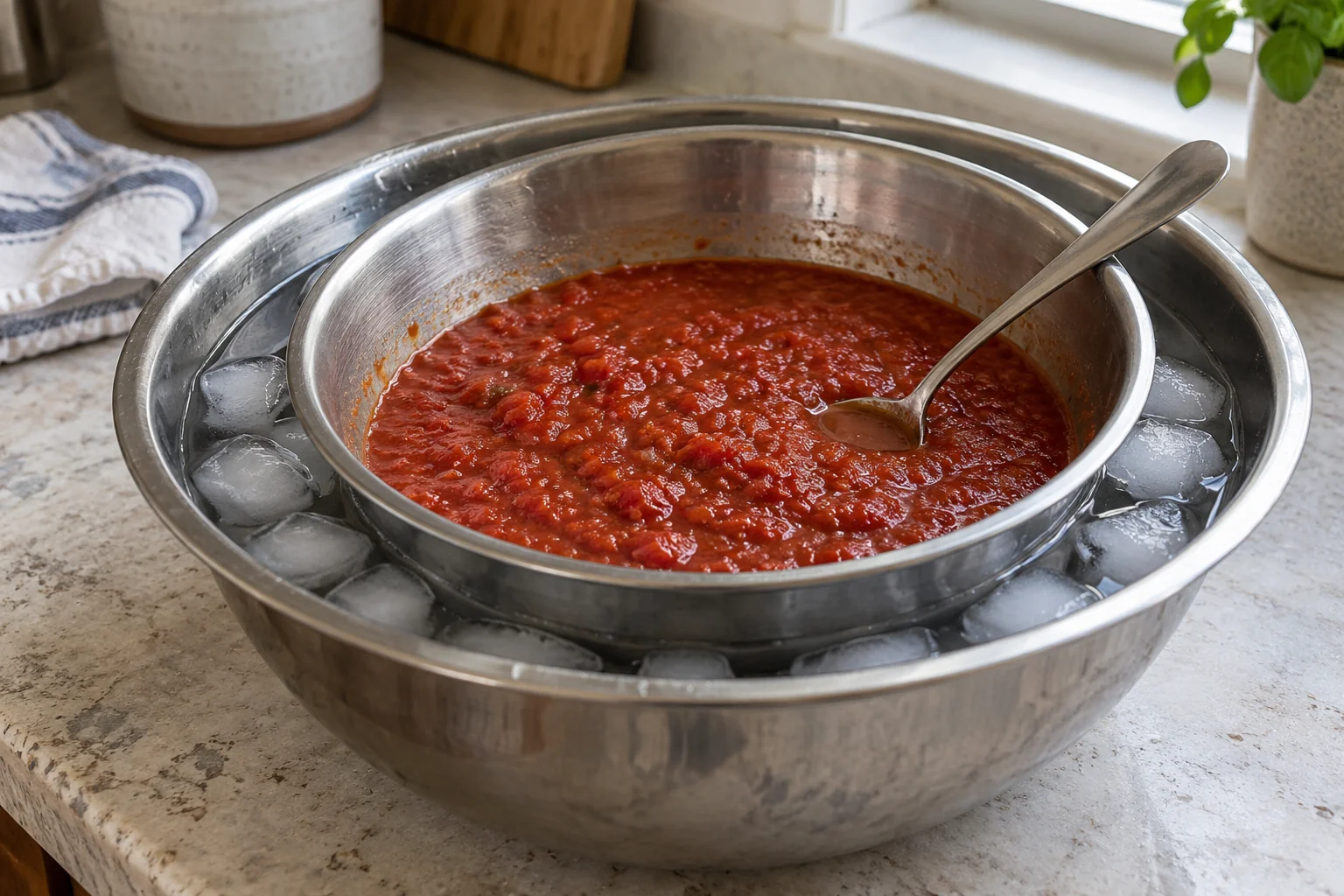
Keep the two jobs separate: a wide, shallow vessel is useful for cooling, while the final package should fit the amount you plan to use. Once chilled, transfer the sauce into its freezer packaging and freeze promptly. Use containers rated for the temperatures involved.
If perishable sauce has already exceeded the room-temperature limit above, discard it. Freezing does not rescue mishandled leftovers.
Should you use freezer bags, containers or jars?
Choose a freezer-rated package that seals reliably and fits your next meal. NCHFP supports both rigid containers and freezer bags for liquid packs; ordinary glass jars can break in the freezer.
Scroll horizontally to see all columns.
| Package | Useful when | Check before filling |
|---|---|---|
| Freezer bag | You want thin, flat portions | Rated for freezing liquids; intact zipper and seams; room to seal cleanly |
| Rigid freezer container | You want a supported, stackable portion | Tight lid, suitable material and the maker’s freezer fill guidance |
| Freezer-safe glass jar | You want to reuse suitable glass | The exact jar is approved for freezing; follow its fill limit and temperature instructions |
For glass, consult the jar-by-jar freezing guide before choosing a container. A jar that once held purchased pasta sauce is not automatically suitable.
Headspace is the empty room above the sauce. NCHFP’s packaging guidance requires expansion space for most foods. Follow your container maker’s freezer fill line or instructions; do not borrow a canning headspace figure or fill a jar into its shoulder. There is no single fill distance established here for every sauce thickness and container shape.
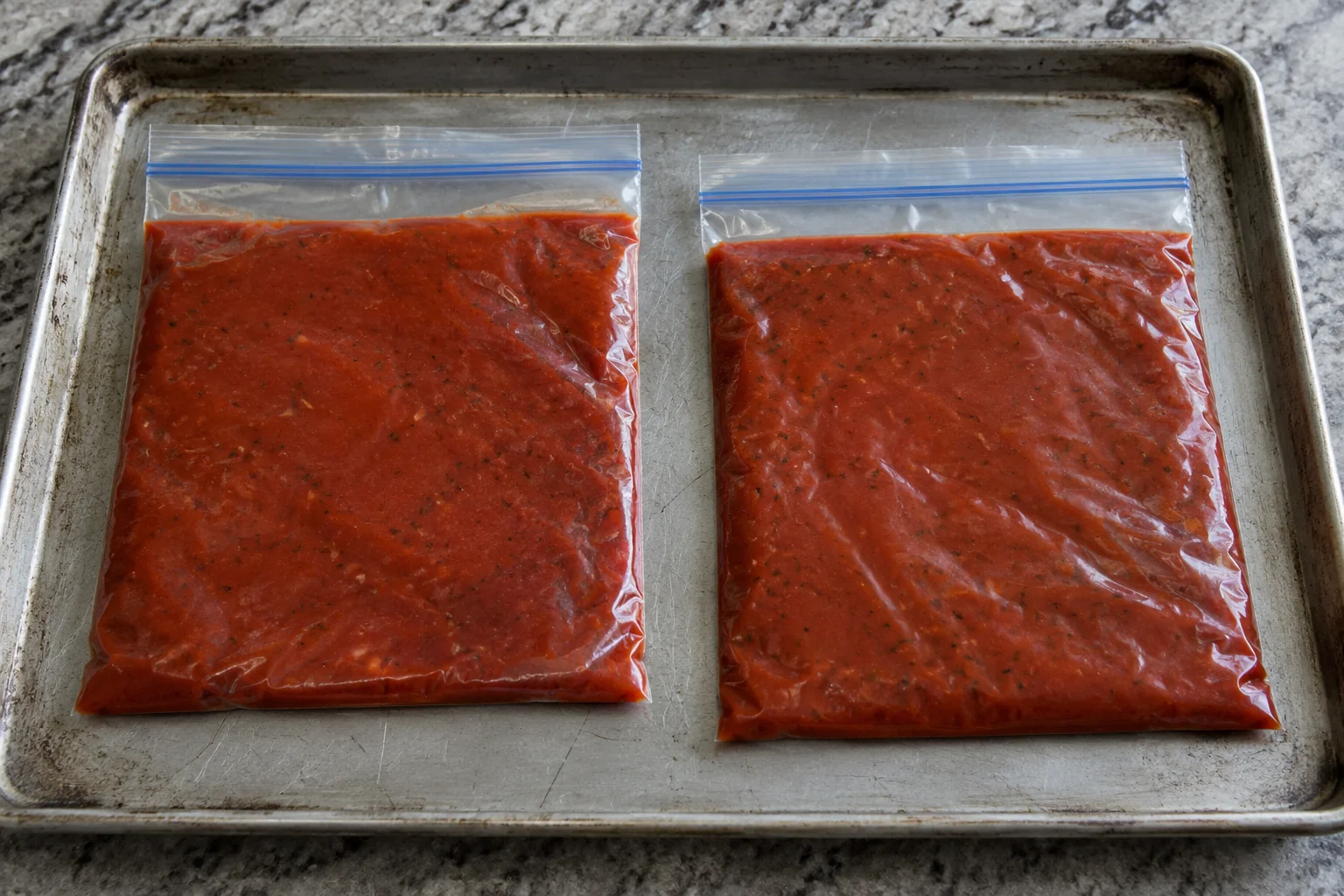
For bags, support the open bag in a bowl while filling it with chilled sauce. Keep sauce off the zipper, gently push out excess air without forcing sauce into the closure, then seal. Leave enough unfilled space for expansion according to the bag instructions. A freezer bag is not automatically safe for boiling or microwaving: transfer sauce to suitable cookware for reheating.
What should you check before the portions go in?
Pack for one intended use, rather than filling every container to capacity. NCHFP recommends single-meal quantities. A small pizza portion and a family pasta dinner need different packages; measure the amount your recipe actually calls for.
Use this packing checklist:
- Meal: Each package contains the amount needed for one planned dish.
- Cooling: Sauce was refrigerated promptly and chilled before final packing.
- Package: It is freezer-rated, with a clean, intact seal and expansion room.
- Label: Record “cooked tomato sauce,” ingredients or additions, the packing date and amount. Add a meal note if useful.
- Placement: Freeze new packages in a single layer; stack after they are solid, as USDA freezing guidance recommends.
A tray helps keep bags flat and contains a possible leak. After freezing, organize the portions by date. Record the location and amount in the freezer inventory tool so the next cook can find them.
How long can frozen tomato sauce stay in the freezer?
USDA gives 3–4 months for frozen leftovers as general quality guidance, not a tomato-sauce-specific expiration date. Food handled safely before freezing and kept continuously at 0°F or below remains safe indefinitely, according to USDA; flavor and texture can decline. The refrigerator guideline for cooked leftovers is 3–4 days at 40°F or below. Freeze within that window, preferably while the sauce is freshly made.
Label the date so you can rotate stock, rather than treating a long freezer stay as a guarantee of unchanged flavor. Limit trapped air and use well-sealed freezer packaging: USDA identifies air exposure as the cause of freezer burn. Freezer burn is a quality problem, and it cannot tell you whether the sauce was cooled safely before freezing.
How do you thaw and reheat a portion?
Thaw in the refrigerator in a dish that can catch leaks. USDA also allows cold-water thawing in a leakproof bag, changing the water every 30 minutes and cooking immediately afterward, or microwave thawing followed immediately by heating. Do not thaw on the counter.
Transfer sauce to a saucepan. USDA says to bring reheated sauces to a rolling boil and heat leftovers to 165°F, checked with a food thermometer. Stir for even heating; check several places if using a microwave-safe covered, vented dish. The frozen portion’s thickness determines the time, so a fixed number of minutes is not a reliable endpoint.
USDA permits refreezing leftovers thawed in the refrigerator; after cold-water or microwave thawing, cook before refreezing. Small portions make repeated thawing unnecessary. For another liquid-food workflow, see freezing soup in useful portions.
Method and sources
Updated October 16, 2026 for US home kitchens. This guide compiles USDA FSIS cooked-leftover and freezing guidance with NCHFP packaging and tomato information, all opened on that date. It does not report a recipe trial, establish a uniform shelf life for meat or cream sauces, or provide instructions for shelf-stable canning. Raw-tomato procedures are included only to distinguish the task; they are not evidence that a finished sauce has been tested.
Explore more in Food Storage & Freezer Guides.
Official guidance and sources
Sources last checked October 16, 2026.
- Leftovers and Food Safety , USDA Food Safety and Inspection Service (accessed October 16, 2026) General cooked-leftover guidance, not a tested tomato-sauce recipe or recipe-specific shelf life.
- Freezing and Food Safety , USDA Food Safety and Inspection Service (accessed October 16, 2026) Freezer temperature, air exposure, freezing in a single layer and safe thawing.
- Containers for Freezing , National Center for Home Food Preservation, University of Georgia (accessed October 16, 2026)
- Packaging and Labeling Foods , National Center for Home Food Preservation, University of Georgia (accessed October 16, 2026)
- Freezing Tomatoes , National Center for Home Food Preservation, University of Georgia (accessed October 16, 2026) Separate procedures for raw tomatoes, juice and stewed tomatoes; not a cooked pasta-sauce recipe.
- Foods That Do Not Freeze Well , National Center for Home Food Preservation, University of Georgia (accessed October 16, 2026) Milk sauces may curdle or separate; texture guidance only.