
Freezing Food in Mason Jars: Check the Jar, Leave Room and Thaw Safely
Check the Ball jar chart before you freeze food in a mason jar. Leave 1/2 inch of headspace only on sizes that chart marks freezer-safe, then thaw leftovers by a USDA method.
Updated October 2026
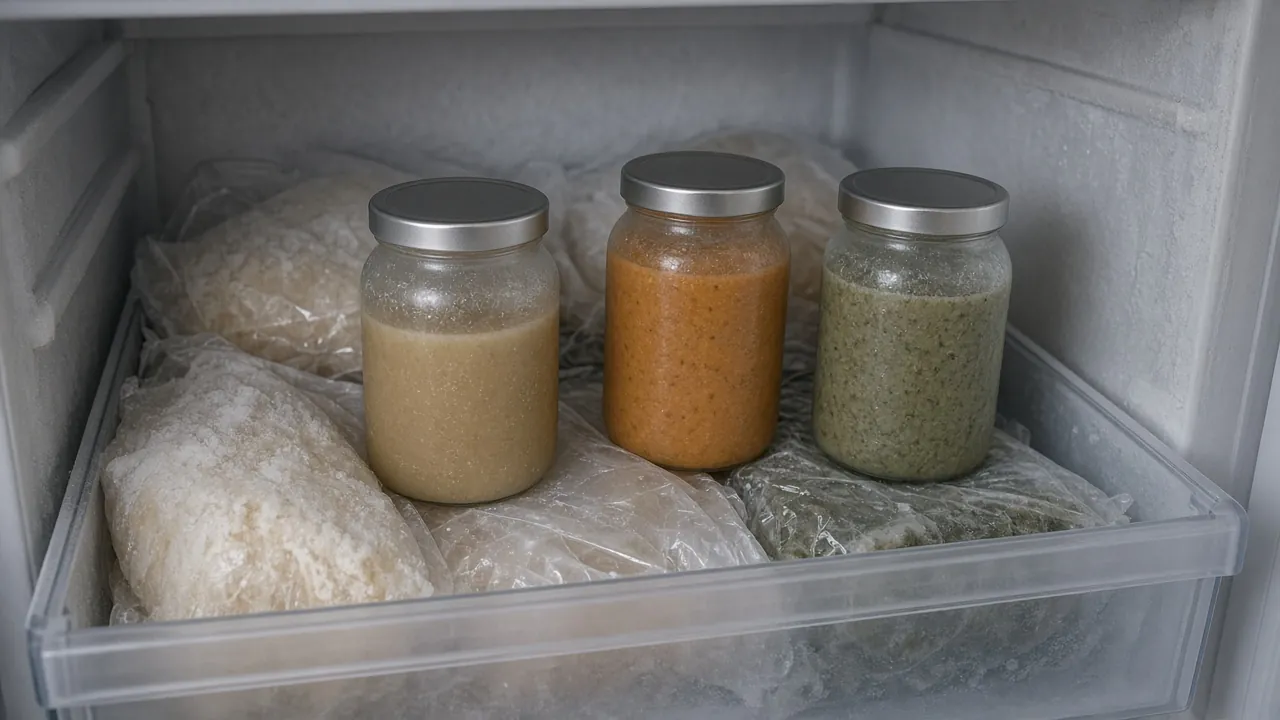
A cracked jar in the freezer wastes the food inside it. Check the freezer mark for this exact size before you fill the jar. Leave 1/2 inch of headspace only on a jar the Ball chart marks freezer-safe.
This guide is for a home cook in the United States who wants to freeze soup, sauce, or another leftover in a glass jar already on the shelf. It covers the jar mark, the empty space, cooling before packing, and thawing. It does not give canning times.
Match the jar in your hand to one row before you fill it. Ball’s jar-size chart, read from a saved copy on October 14, 2026, marks only some sizes Freezer Safe, and the headspace it states for those jars is 1/2 inch. The wide-mouth 32 oz row has no Freezer Safe label. A different brand, an older jar, or a blank freezer cell means you switch containers. Headspace and storage-time cells stay empty where the opened pages give no figure.
Which sizes does Ball mark freezer-safe?
Use the row that matches the jar you have. Ball published this list for Ball jars. Another brand, and an older jar that is not on the list, have no row here.
Scroll horizontally to see all columns.
| Ball jar on the chart | Freezer mark | Headspace for freezer-safe jars | Foods named on that row |
|---|---|---|---|
| Regular mouth, 4 oz | Freezer Safe | 1/2 inch | Jams, jellies, mustards, ketchup, dipping sauces, flavored vinegars, small portions |
| Regular mouth, 8 oz | Freezer Safe | 1/2 inch | Jams, jellies, conserves, preserves, fruit syrups, chutneys, pizza sauce |
| Regular mouth, 12 oz | Freezer Safe | 1/2 inch | Jams, jellies, marmalades |
| Regular mouth, 16 oz | Salsas, sauces, relishes, pie fillings | ||
| Regular mouth, 32 oz | Fruit and vegetable slices, pickles, tomato-based juices and sauces | ||
| Wide mouth, 16 oz | Freezer Safe | 1/2 inch | Salsas, sauces, relishes, fruit butters |
| Wide mouth, 24 oz | Freezer Safe | 1/2 inch | Asparagus, pickles, sauces, soups, stews |
| Wide mouth, 32 oz | Pickles, tomatoes, whole or halved fruits and vegetables | ||
| Wide mouth, 64 oz | Apple juice and grape juice |
The wide-mouth 32 oz row has no Freezer Safe label. On this chart, mouth width and the freezer mark are separate. That jar goes back on the shelf, and the food goes into a container that is marked for the freezer.
Ball also says jars with straight or tapered sides are ideal for freezing as well as canning, and jars with shouldered sides are ideal for shelf storage. The chart does not say which ounce size has which shape, so the table does not assign one.
The National Center for Home Food Preservation says regular glass jars break easily at freezer temperatures. It says to choose wide-mouth dual-purpose jars made for freezing and canning. Those jars have been tempered to withstand extremes in temperature, and the wide mouth lets you remove food that is only partly thawed. The jar still has to be made for freezing. That sentence does not fill a blank cell on the Ball chart.
If you use a standard canning jar with a narrow mouth, the same page says to leave extra headspace, because expansion of the liquid could cause the jar to break at the neck. Some foods have to thaw completely before they come out. The page does not state that extra headspace in inches.
How much empty space does the food need?
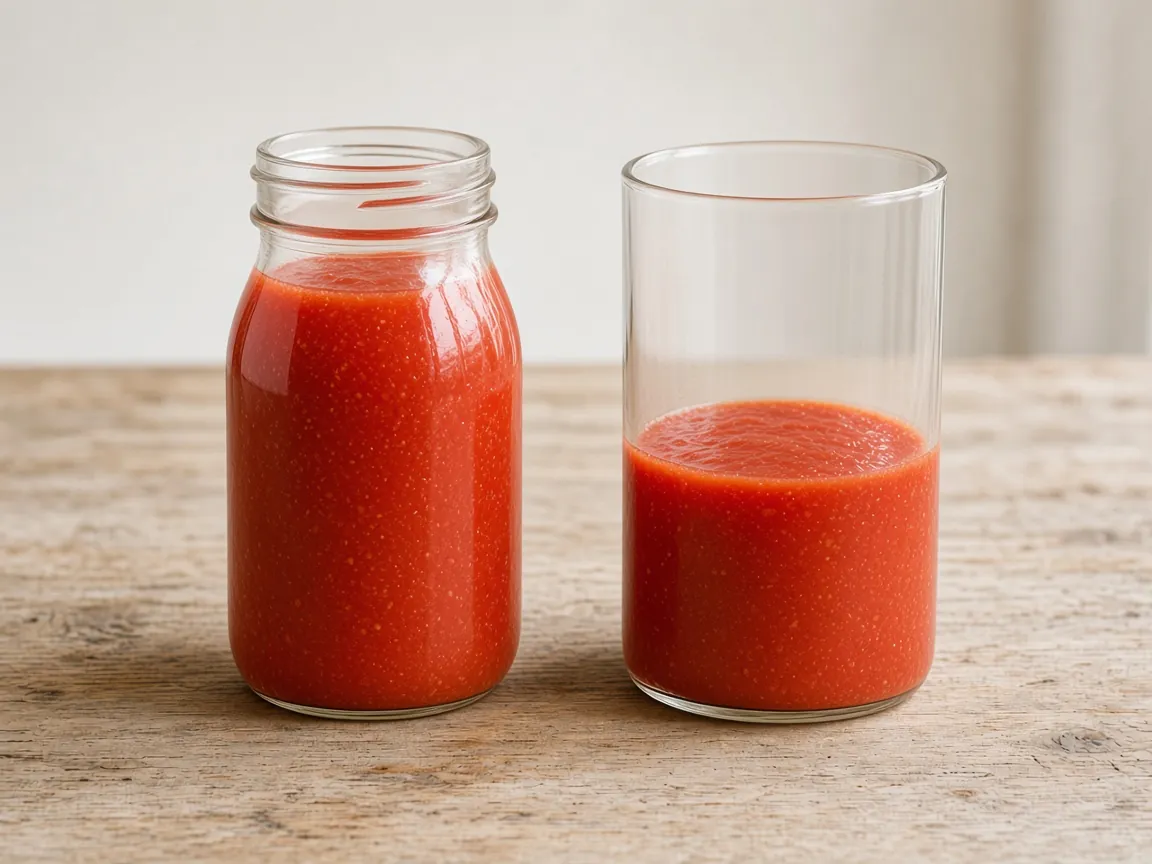
Headspace is the empty room between the packed food and the closure. Ball says to leave 1/2 inch when filling freezer-safe jars, so the food has room to expand. Use 1/2 inch on a row marked Freezer Safe. A blank freezer cell has no headspace figure from that line.
The extension packaging page says most foods need headspace between the food and the closure so the food can expand as it freezes. It names foods that do not need headspace: loose-pack vegetables such as asparagus and broccoli, bony pieces of meat, tray-packed foods, and breads. Those exceptions have no inch figure on the page, and the page does not say to put them in a glass jar.
What do you do before the jar goes in the freezer?
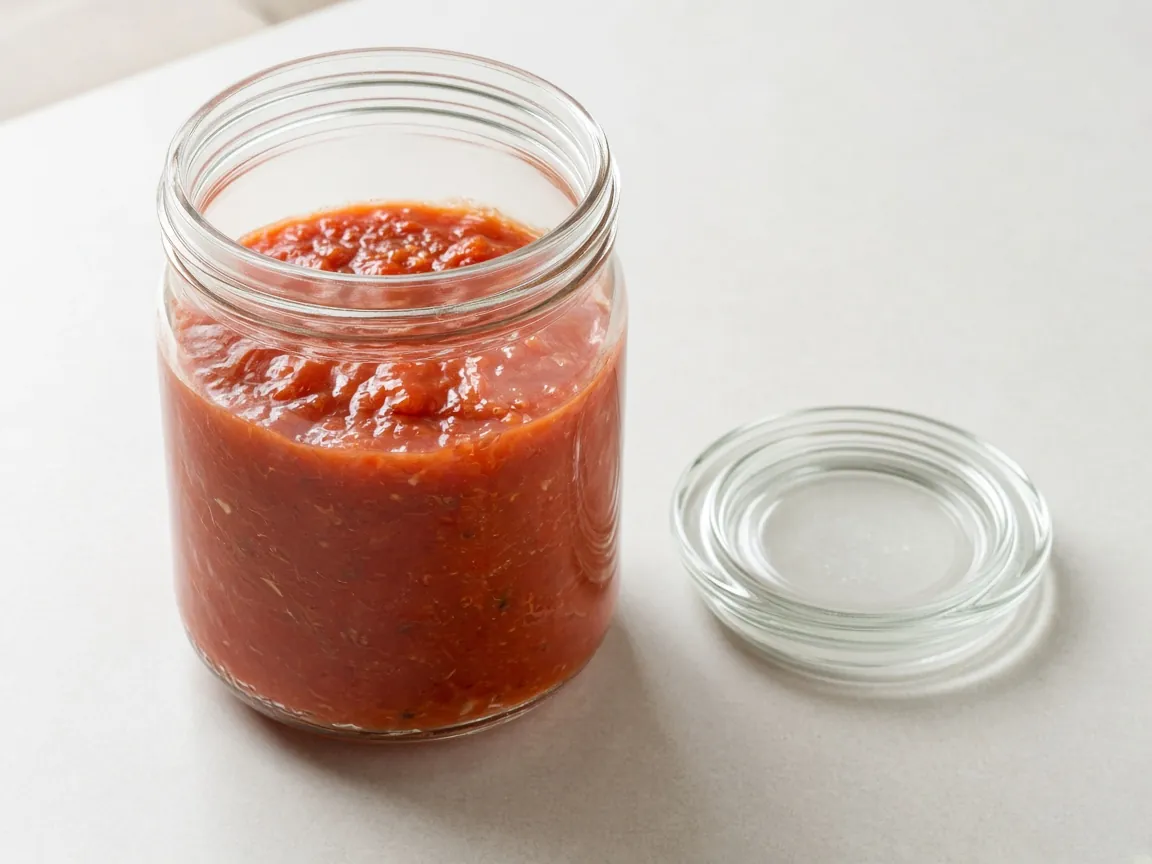
Cool the food, and any syrup, before you package it. The extension packaging page says cooling speeds freezing and helps keep color, flavor, and texture. Pack an amount you will use for one meal.
For leftovers, USDA FSIS says to bring the food to 40°F or below quickly. Divide a large pot into shallow containers. A big pot of soup takes a long time to cool. Hot food can go into the refrigerator, or into an ice or cold water bath first. Refrigerate leftovers within 2 hours of cooking, or within 1 hour if the air is above 90°F. Throw away perishable food left out longer. Bacteria grow rapidly between 40°F and 140°F.
A cover on a rigid container should fit tightly. If it does not, add freezer tape. Freezer tape is made to stick at freezing temperatures. Keep the sealing edge free of moisture and food.
Do not freeze fruits and vegetables in a container with a capacity over one-half gallon. Food in a larger container freezes too slowly to make a satisfactory product. That limit is for fruits and vegetables. The 64 oz Ball jar is a separate case: the chart does not mark it Freezer Safe.
Label the package with the product name, any added ingredients, the packaging date, the number of servings or the amount, and the form, such as whole or sliced. Use freezer tape, a marking pen or crayon, or a gummed label made for the freezer. The leftover label guide keeps the cooking date, the frozen date, and the thawed date on separate lines.
If the food is soup, cool and portion the pot with the soup portion guide. Cooling and reheating for a cooked meal are in the cooked meals guide.
How do you thaw a jar of leftovers?
USDA lists three safe ways to thaw leftovers: the refrigerator, cold water, and the microwave.
Refrigerator thawing takes the longest. The leftovers stay safe the whole time. After thawing, use the food within 3 to 4 days or refreeze it.
Cold-water thawing is faster and needs more attention. The leftovers have to be in a leak-proof package or plastic bag. If the bag leaks, water can enter the food and bacteria from the air or the surroundings can enter with it. Cook food thawed this way before you refreeze it.
Microwave thawing is the fastest. Keep heating until the food reaches 165°F on a food thermometer. Food thawed in the microwave can be refrozen after it reaches that temperature.
A wide mouth lets you remove food that is only partly thawed. Some foods have to thaw completely before they come out of the jar. For meat and poultry, the preservation guidance on the containers page says never to thaw them in a conventional oven or at room temperature.
Reheating frozen leftovers without thawing is safe. Use a saucepan or microwave for soup or stew, or an oven or microwave for a casserole. It takes longer than reheating food that was thawed first.
Reheated leftovers should reach 165°F on a food thermometer. Bring sauces, soups, and gravies to a rolling boil. Cover the food so it heats through. In a microwave, cover and rotate the food, and check the temperature in several places.
USDA says it is safe to refreeze food left after you reheat previously frozen leftovers to 165°F. If a large container was thawed in the refrigerator and you need only part of it, remove that part and refreeze the rest without reheating it.
When do you switch containers?
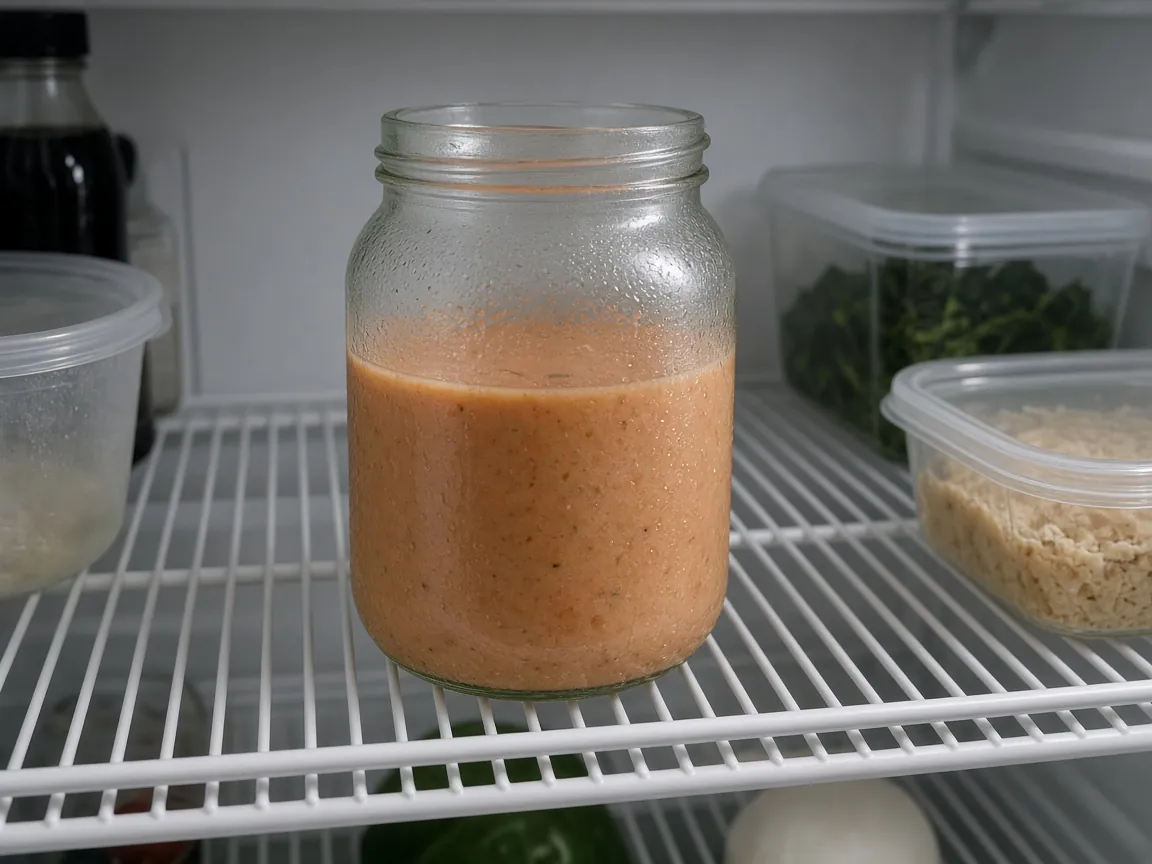
Put the jar back and use another container when any of these is true:
- The jar is not one of the Ball sizes in the table.
- The freezer cell for that size is blank.
- You cannot tell whether the jar was made for freezing.
- The food is fruit or vegetables and the container holds more than one-half gallon.
- You do not know that the leftovers were refrigerated within 2 hours, or within 1 hour above 90°F.
A cracked jar is a failed package. Do not serve that food.
Scroll horizontally to see all columns.
| Food | Freezer time | What the opened page sets |
|---|---|---|
| Leftovers | 3 to 4 months | USDA FSIS leftovers page, last updated July 31, 2020. Frozen leftovers are safe indefinitely and can lose moisture and flavor when stored longer. |
| Soup | ||
| Tomato sauce | ||
| Fruit or vegetables | Do not freeze them in a container over one-half gallon. The containers page gives no month. |
Soup and tomato sauce have no freezer month of their own on the pages opened for this guide. The leftovers row applies when the food was handled as that USDA page describes. It is not a separate test of soup or sauce.
How these figures were limited
Ball’s rows come from “Take the Guesswork out of Choosing Mason Jar Sizes for Canning,” saved on October 11, 2026, and read again on October 14, 2026. Glass breakage, tempered wide-mouth jars made for freezing and canning, the half-gallon produce limit, headspace exceptions, cooling before packaging, and the label lines come from the National Center for Home Food Preservation. Those pages were extracted from So Easy to Preserve, 6th edition, 2014. Cooling times, the 40°F to 140°F range, the leftover freezer period, thawing, and reheating come from USDA FSIS, “Leftovers and Food Safety,” last updated July 31, 2020. The saved copies were read on October 14, 2026.
This site did not freeze a test batch. Blank cells are figures those pages do not give. When the jar in your hand carries its own instructions, follow those instructions.
Run the table on the jar you have. If the freezer cell is blank, move the food to another container. If the row says Freezer Safe, cool the food, leave 1/2 inch, write the packaging date, and thaw it later in the refrigerator, in cold water, or in the microwave.
Explore more in Food Storage & Freezer Guides.
Official guidance and sources
Sources last checked October 14, 2026.
- Take the Guesswork out of Choosing Mason Jar Sizes for Canning , Ball Mason Jars (accessed October 11, 2026) Manufacturer chart. Freezer Safe appears on regular-mouth 4, 8, and 12 oz and wide-mouth 16 and 24 oz. The 1/2 inch headspace line applies when filling freezer-safe jars. Saved copy read again on October 14, 2026.
- Containers for Freezing , National Center for Home Food Preservation, University of Georgia (accessed October 11, 2026) Regular glass breaks easily at freezer temperature. Wide-mouth dual-purpose jars made for freezing and canning are tempered for temperature extremes. Narrow-mouth standard canning jars need extra headspace, with no inch figure on this page. Fruits and vegetables should not go in containers over one-half gallon. Extracted from So Easy to Preserve, 6th edition, 2014. Read again on October 14, 2026.
- Packaging and Labeling Foods , National Center for Home Food Preservation, University of Georgia (accessed October 11, 2026) Cool food before packaging. Most foods need headspace; listed exceptions have no inch figure. Label name, added ingredients, packaging date, servings or amount, and form. Extracted from So Easy to Preserve, 6th edition, 2014. Read again on October 14, 2026.
- Leftovers and Food Safety , USDA Food Safety and Inspection Service (accessed October 11, 2026) Two-hour rule, 40°F cooling, 3 to 4 months as the freezer period for leftovers, thawing, and reheating. Page last updated July 31, 2020. Read again on October 14, 2026.