
Can You Freeze Yogurt for Cooking?
Portion, thaw and cook yogurt with its label limits in mind.
Freezing a large tub can waste yogurt if you thaw more than your recipe needs. Yes, you can freeze yogurt for cooking when the product’s instructions allow it, but expect a changed texture and freeze only the amount you will use together.
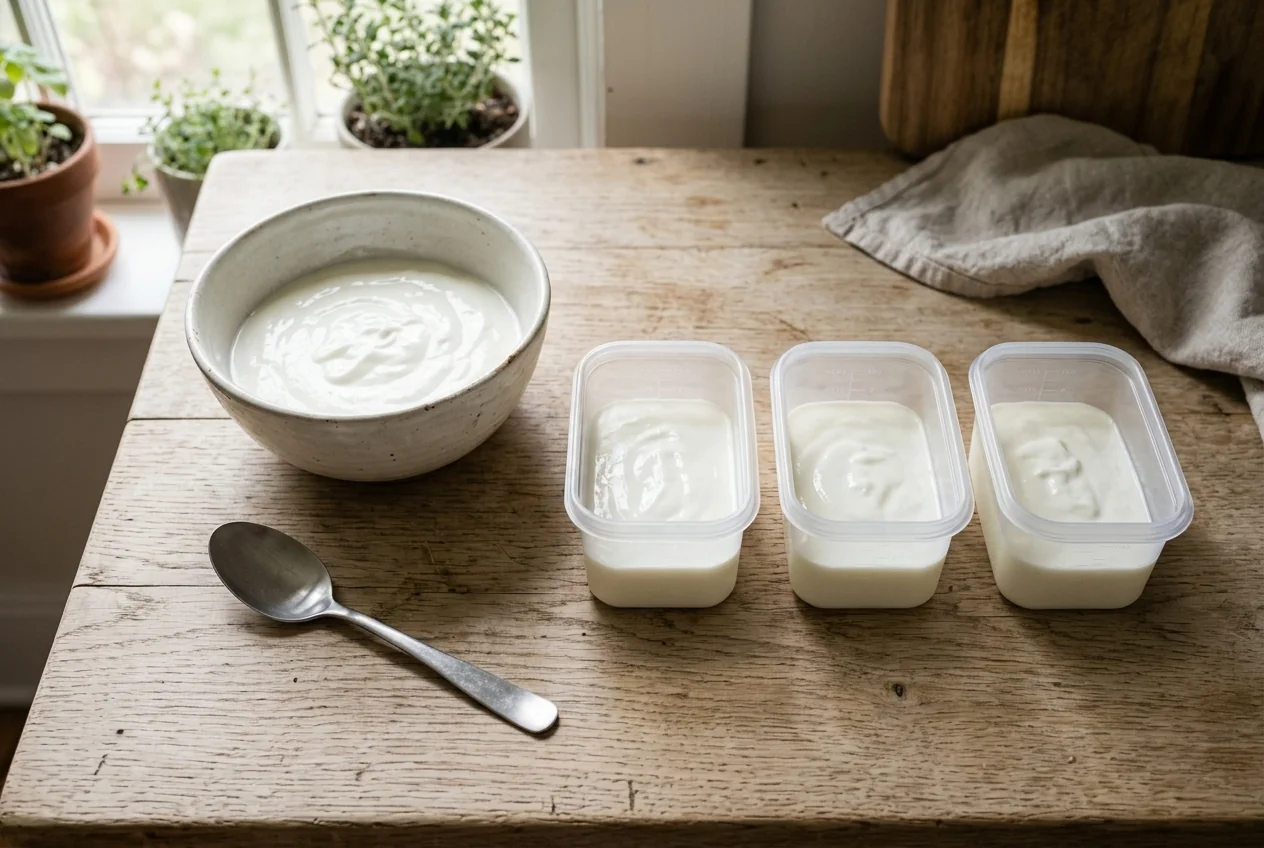
This guide covers purchased dairy yogurt, including Greek yogurt, for US home kitchens. Freezing is a storage choice, not a way to rescue yogurt that has been mishandled. We have not run a yogurt-freezing or recipe trial; cooking uses below are suggestions to try in a small batch.
Check the package before choosing a portion
Start with the instructions for the actual product. Permission to freeze one brand does not establish the storage life of another.
Scroll horizontally to see all columns.
| What you have | What to check | What to do |
|---|---|---|
| Unopened yogurt | Manufacturer’s freezing advice, printed date and whether the tub is suitable for freezing | Follow those instructions; do not assume the original pot is freezer-rated. |
| An opened tub | Opening date, refrigerated storage history and after-opening instructions | Portion while it is still within the product’s instructions. Freezing does not restart an opened tub’s storage history. |
| Yogurt for a known recipe | Required amount, plain or flavored, regular or Greek | Freeze a recipe-sized amount and keep its identity with the portion. |
| Yogurt for a smooth dip or topping | Whether the final texture matters | Keep fresh yogurt for that use, or first try one small frozen portion. |
| Yogurt with an uncertain storage history | Whether it has remained properly refrigerated | Do not use freezing as a safety fix. |
A concrete brand example: Chobani Consumer Care says its frozen Greek Yogurt products may be stored only through the expiration date on the container, should be eaten as soon as thawed, and should not be refrozen. It also warns of texture changes. That is guidance for Chobani’s products; it does not grant other yogurts extra weeks beyond their dates.
Freeze an amount you can use in one recipe
Mississippi State University Extension recommends freezing foods in amounts needed for future meals and choosing packaging intended for freezer use. Apply that approach to the recipe you actually plan to cook:
- Choose the recipe first. Check its yogurt type and amount before dividing the tub. Plain Greek yogurt and sweetened fruit yogurt are different ingredients.
- Use clean utensils and freezer-safe containers. Choose small containers with tight lids. Check the manufacturer’s directions if using glass.
- Leave expansion room. Keep space below the closure rather than filling to the brim; follow the container’s filling instructions.
- Record the product and amount. Add the freezing date, the original printed date, the opening date if known, and any brand-specific thawing instructions. Keep a photo of the original package if you discard it.
- Freeze promptly. Leave space between new packages until frozen. Add each portion to your freezer inventory so it has a planned use.
There is no standard amount in a homemade yogurt cube. If you use a freezer-suitable tray, measure the yogurt going into each cavity and transfer frozen portions to sealed freezer packaging. Count portions from that measurement rather than assuming every cube equals a tablespoon.
Expect thinner or grainier yogurt after thawing
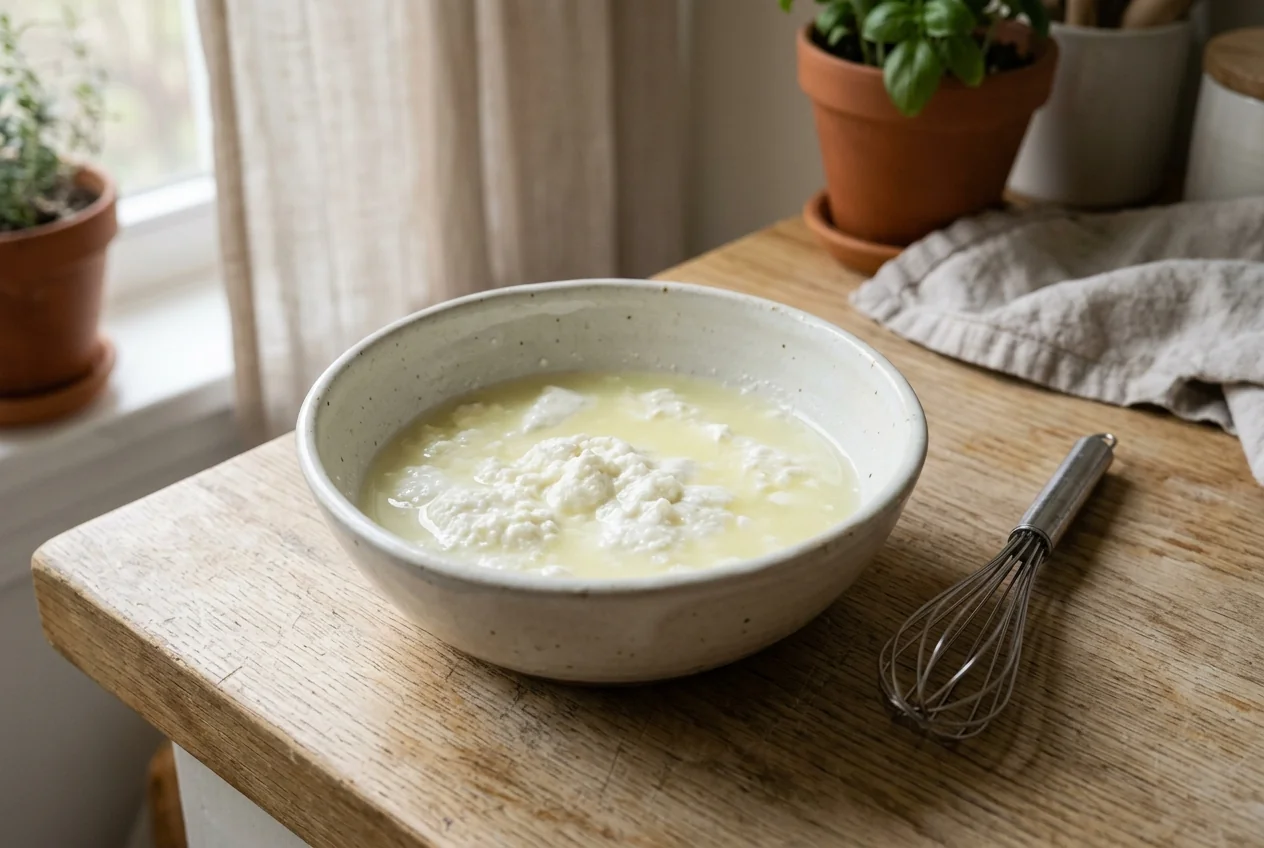
Mississippi State’s freezing guidance lists yogurt among foods that do not freeze well. This is a quality warning: the original spoonable consistency may not survive. Chobani also explicitly warns that its yogurt’s texture changes.
Dairy Australia recommends stirring after thawing and suggests pre-portioned yogurt for baking. Once the portion has thawed safely, try stirring it back together before deciding whether it suits the recipe. Do not drain away separated liquid automatically: that changes the amount and consistency of the ingredient you measured. If it remains too grainy for your intended dish, choose another use rather than assuming more stirring will restore fresh yogurt.
A changed texture alone does not establish safety. Equally, a smooth appearance does not establish a safe storage history.
Choose cooking and baking uses by texture

Our practical suggestion is to start with a recipe where yogurt is mixed into other ingredients. These are candidates for a small trial, not tested substitutions:
Scroll horizontally to see all columns.
| Intended use | Decision after thawing |
|---|---|
| Pancakes, muffins or a quick bread that already calls for yogurt | Stir the portion together and try a small batch using the recipe’s specified yogurt type. |
| A cooked dish where yogurt is one ingredient | Accept possible graininess; check the recipe’s method for adding dairy. |
| A smooth hot sauce | Use fresh yogurt if a smooth finish is essential. Previously frozen yogurt offers no guarantee against splitting during cooking. |
| A cold dip, topping or spoonable breakfast | Check one thawed portion first; these uses make texture changes more noticeable. |
Greek yogurt can also be frozen if its product guidance allows it. Its thicker starting texture does not guarantee a smooth result after thawing. For baking, follow a recipe written for Greek yogurt rather than treating it as interchangeable with thinner yogurt.
If you are planning a dairy-based soup, our soup-freezing guide discusses separating the base from ingredients that may change during freezing.
Thaw in the refrigerator and keep brand limits
USDA FSIS advises a freezer at 0°F or below and a refrigerator at 40°F or below. Move the covered portion into the refrigerator, with a dish underneath to catch leaks. Allow time for the center to thaw; do not thaw it on the kitchen counter. See USDA’s freezing and thawing guidance.
USDA explains that freezing suppresses microbial activity; microbes can become active again after thawing. Its general indefinite-frozen-storage guidance assumes food was safe when frozen and stayed continuously at the required temperature. It does not promise unchanged yogurt quality or replace a product’s specific instructions.
We do not assign every yogurt a fixed freezer life or a new number of refrigerated days after thawing. Follow the product’s limits and plan to thaw only what you can use promptly. Although USDA generally permits refreezing food thawed safely in the refrigerator, a brand can give stricter instructions: Chobani’s guidance says not to refreeze its yogurt. Portioning ahead avoids that decision.
Method and sources
Reviewed October 15, 2026 for US readers. This is a source-based storage guide, with manufacturer instructions checked separately from USDA’s general safety guidance and Mississippi State Extension’s quality advice. No cross-brand comparison, cooking performance test or health claim is made. Before freezing the rest of a tub, check its instructions and try one recipe-sized portion.
Explore more in Food Storage & Freezer Guides.
Official guidance and sources
Sources last checked October 15, 2026.
- Can I freeze Chobani? , Chobani Consumer Care (accessed October 15, 2026) Instructions for Chobani Greek Yogurt, including printed expiration date, prompt use after thawing and no refreezing.
- Freezing and Food Safety , USDA Food Safety and Inspection Service (accessed October 15, 2026) General freezer and refrigerator temperatures, microbial survival, thawing and refreezing; not a yogurt-specific shelf-life recommendation.
- Can you freeze yoghurt? , Dairy Australia (accessed October 15, 2026) Texture changes, premeasured portions, stirring and possible baking uses; US safety advice comes from USDA.
- Freezing Food , Mississippi State University Extension, HappyHealthy (accessed October 15, 2026) Yogurt quality warning, meal-sized portions, suitable packaging and small-batch trials.