
Meyer Lemons vs Regular Lemons: Kitchen Differences
How Meyer lemons differ from regular lemons in flavor, rind and use, and how to substitute one for the other in baking, sauces and drinks.
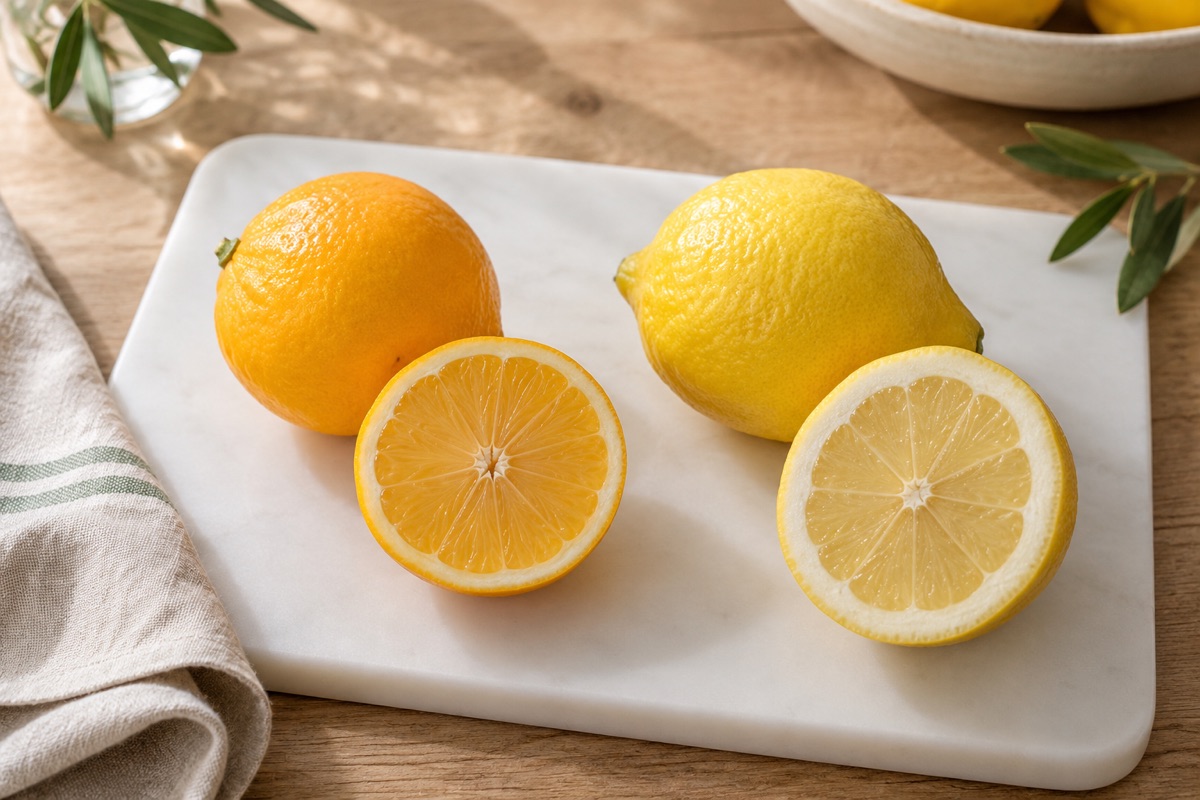
Meyer lemons are a hybrid citrus fruit native to China, described as a cross between a citron and a mandarin/pomelo hybrid rather than a plain lemon. They usually taste sweeter and less acidic than standard supermarket lemons, and their rind is thin and fragrant. In most recipes you can swap one for the other if you adjust the sweetness and acid to taste.
This guide compares them for cooking, with notes on what to do when your recipe names one and you have the other.
What each one is
Regular lemons are the standard sold year-round in most grocery stores. Varieties differ, but they share a bright yellow rind and a sharp, strongly acidic juice.
Meyer lemons are a hybrid, not a true lemon. Wikipedia describes them as a cross between a citron and a mandarin/pomelo hybrid, native to China, and says they reached the United States in 1908. For cooks, the practical points are that the fruit is rounder, with a deep yellow rind that has a slight orange tint when ripe, and that the flavor is sweeter and less acidic. The thin skin is edible.
Meyer lemons are produced throughout the year, but most of the crop is ready to harvest in winter, so they are most common then and can be harder to find at other times. Availability depends on where you shop.
Flavor and kitchen use
Scroll horizontally to see all columns.
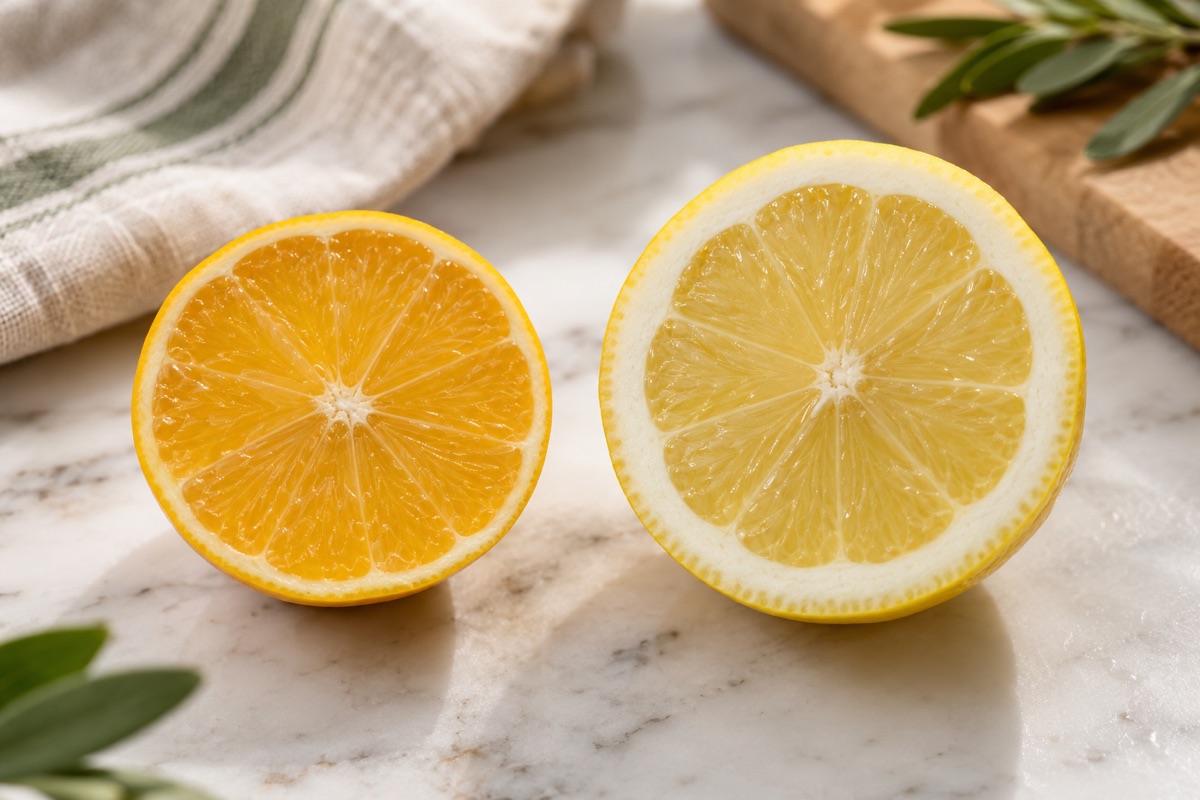
| Feature | Meyer lemon | Regular lemon |
|---|---|---|
| Shape and color | Rounder, deep yellow to orange-tinged | Oval, bright yellow |
| Rind | Usually thin and smooth | Usually thicker, more textured |
| Juice | Less sharp, sometimes called floral | Sharp, strongly acidic |
| Zest | Fragrant, a little sweet | Bright, clean citrus |
| Typical use | Desserts, curds, dressings, drinks | Everything, especially where sharp acid is wanted |
Flavor is described from general cooking experience and varies by fruit, season and growing conditions, so taste your own lemons. We do not rank one as better. Each suits different jobs.
When Meyer lemons are the better choice
Use Meyer lemons in desserts and curds, where a softer, more aromatic flavor suits the dish, and in dressings and fresh sauces where you want less bite. They also work well when you use the whole fruit, since the thin rind is less bitter, in a quick pickle or thinly sliced as a garnish.
When regular lemons are the better choice
Use regular lemons in dishes that need strong acid, such as marinades, brines, or recipes that rely on sharpness to balance rich ingredients. They are also the safer pick for recipes written for standard lemons, where the acidity is part of the structure, as in some baked goods. And for everyday cooking they are easier to find and usually cost less.
Substitution notes
Regular lemon in place of Meyer
Use the same volume of juice and zest as a starting point, then taste. If the mixture is too sharp, add a little more sugar, or reduce the juice slightly and make up the liquid with water. Expect a brighter, less floral flavor.
Meyer in place of regular lemon
Start with the same volume of juice and zest. If the recipe needs sharp acid, as for a marinade, brine or acidified food, add a little more juice or a splash of vinegar. Do not rely on Meyer juice for preservation or canning recipes. Use tested recipes and the acidity they call for. Taste before you finish the dish.
A makeshift Meyer substitute
When a recipe asks for Meyer lemons and you cannot find them, a common workaround is to use regular lemon with a little orange or mandarin juice and zest. This is an approximation, not an equivalent, so add small amounts and taste as you go. Citrus size and juiciness vary, so measure juice by volume rather than by number of fruit.
Notes on zest and juice
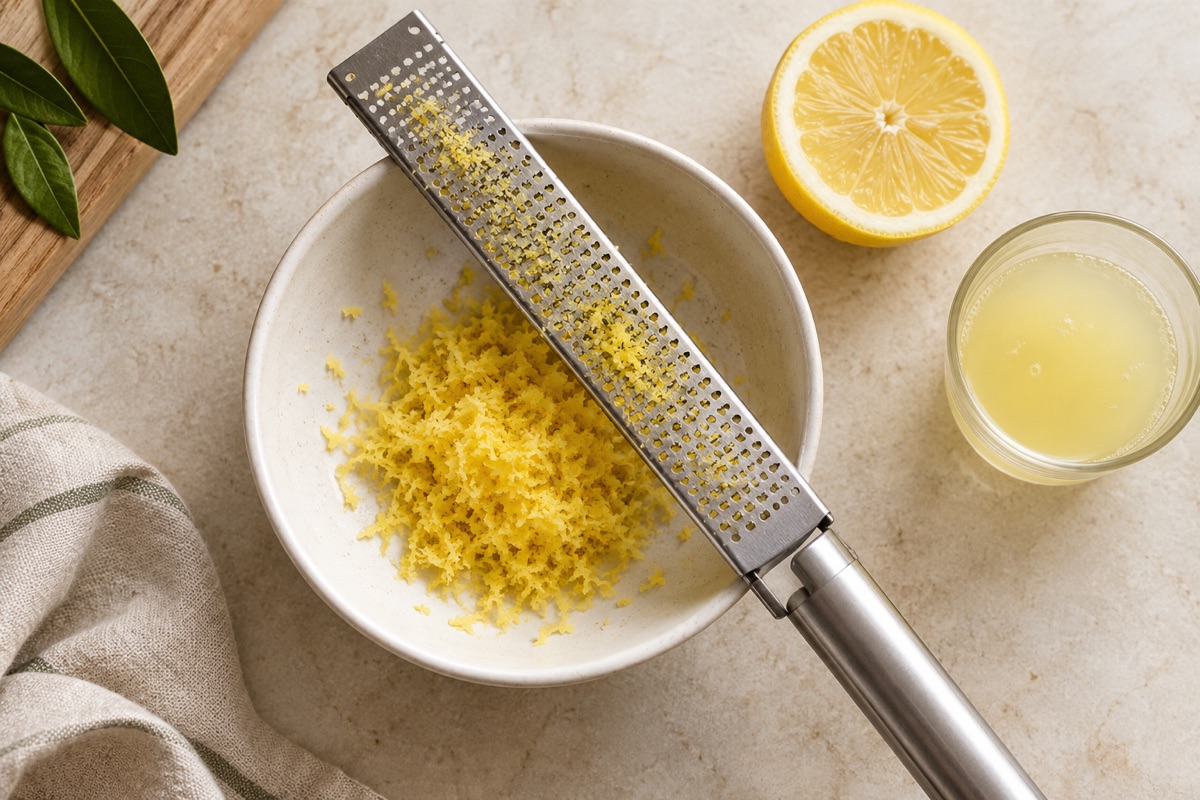
Zest only the colored layer. The white pith underneath is bitter, though usually less so with Meyer lemons because the rind is thin. Wash and dry the fruit before zesting.
Zest carries aroma and oil, while juice carries acid, so check which one your recipe depends on.
Recipes to try
A soft-centered dessert is one of the best uses for Meyer lemons. See the Meyer lemon pudding cake. If you like planning around what is at the market, this piece on seasonal cooking covers how to build a menu around what is in season.
Explore more in Ingredient Guides & Kitchen Comparisons.
Sources
- Meyer lemon - Wikipedia , Wikipedia (accessed October 4, 2026)
- Seasonal Produce Guide | SNAP-Ed , USDA SNAP-Ed (accessed October 4, 2026)